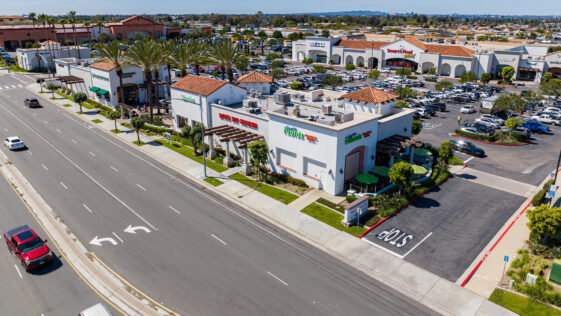
Burger chains are expanding at a rapid rate, even amidst national chatter regarding the increasingly high cost of beef, as well as the push for more vegetarian-friendly meat substitutes. Americans have proven they continue to love burgers and fries, and therefore most areas of the country are seeing major growth of quick-service hamburger establishments. Suburban drive-thru units in family friendly neighborhoods will be prioritized for all burger brands, especially in untapped regions experiencing population growth.
Expect to see California-based burger brands such as In-N-Out Burger, Jack in the Box and The Habit Burger Grill targeting new regions outside their home state. This is partially due to the Golden State’s new law taking effect in April, which requires fast-food establishments with 60+ locations to pay employees a minimum wage of $20. Many of the quick-service burger chains will also be targeting states with more business-friendly policies, perhaps piggybacking off of In-N-Out Burger’s recent announcement about closing a unit in Oakland, Calif., due to increased crime affecting its customers and employees.
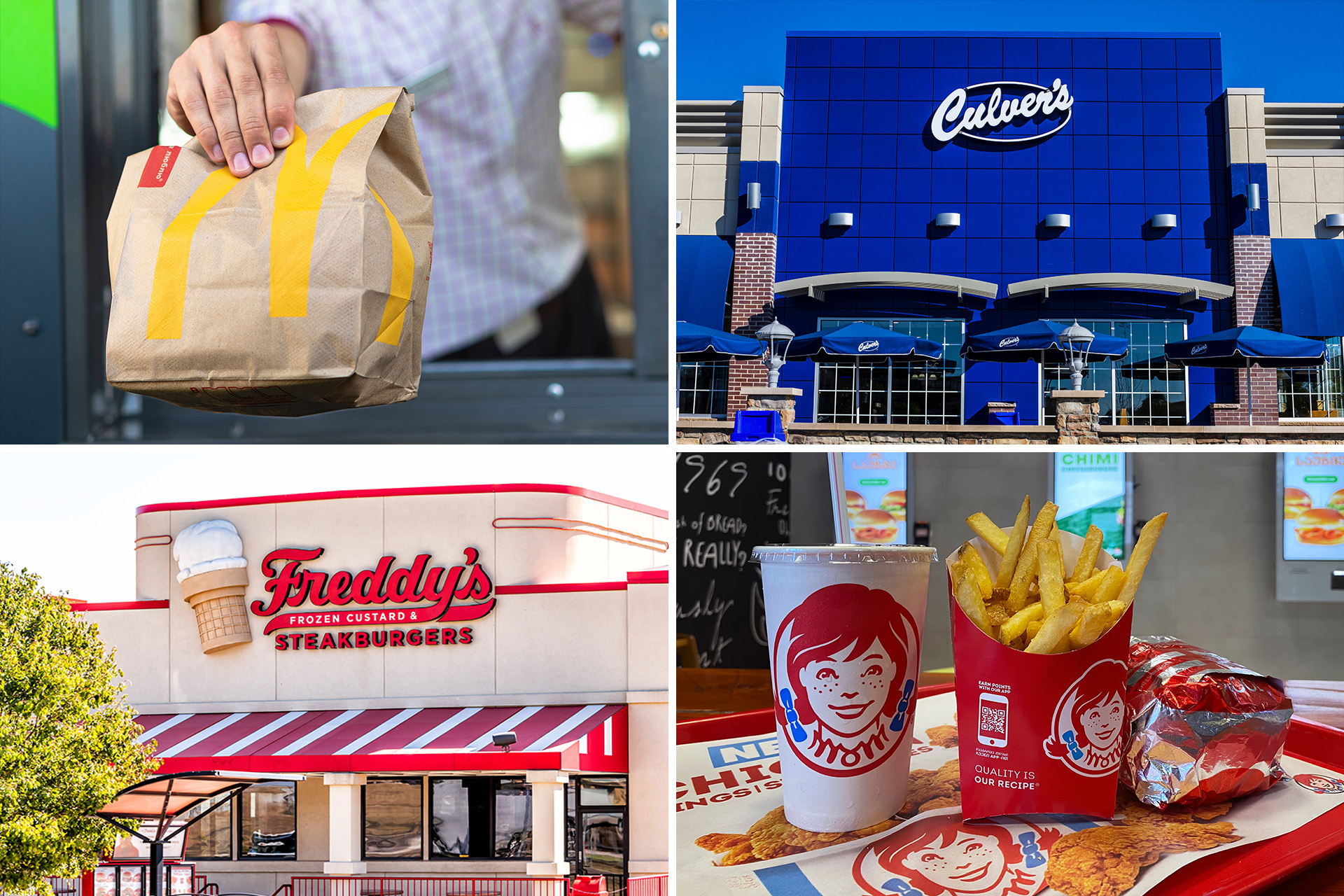
Dine-in-oriented chains such as Shake Shack and The Habit Burger Grill are boosting their drive-thru capabilities, and multiple quick-service chains are also experimenting with opening more drive-thru-only locations without indoor dining. Look for a ramping up of AI capabilities, whether it’s tech-enabled drive-thru technology or kiosk ordering, to help offset extra expenditures, such as the increased employee retention costs. Although most of the major hamburger chains, including Shake Shack, Smashburger, Whataburger, The Habit Burger Grill and In-N-Out Burger, are expanding into new markets throughout the country, the brands that will be especially aggressive with increasing their unit counts are McDonald’s, Wendy’s, Freddy’s Frozen Custard & Steakburgers and Culver’s.
McDonald’s announced massive new restaurant growth projections in the U.S., as the chain plans to open 225 new units per year over the next four years. Most of this expansion will be in markets that experienced population growth over the last four years, notably within Southern states such as the Carolinas, Georgia, Florida, Tennessee, Alabama and Kentucky, as well as into underpenetrated areas within Colorado, Texas, Arizona, Missouri, the Dakotas, Washington, Indiana, New Jersey, New York, Ohio, Nevada and Utah. Expect newly booming suburban neighborhood regions to be especially targeted.
McDonald’s generally prefers to purchase the properties and land for its new restaurants. All manner of spaces will be considered, including non-traditional food-court sites in shopping centers and college campuses. McDonald’s primarily seeks to build its restaurants in the 3,500- to 4,500-s.f. range, ideally on a corner site of a busy retail corridor. Sites can be on a pad of a grocery-anchored center, power center or a neighborhood center. McDonald’s will also open about nine more of its brand-new CosMc’s restaurants throughout Texas. This drive-thru-only concept sells boba sweet drinks and treats such as donut holes, pretzel bites and breakfast sandwiches and debuted in Bolingbrook, Ill., in December.
Wendy’s also has lofty U.S. expansion goals over the next two years, expecting to open an average of 165 units in 2024 and an average of 240 units in 2025. Franchisees are being sought for portions of California, including Bakersfield and the San Francisco Bay Area; Texas, especially north of Corpus Christi and Eastern Waco; South Eugene and South Portland, Ore.; Utica and Oswego County, N.Y.; Cambria and Blair County, Pa.; Burlington, Vt.; Fargo, Minn.; Detroit; St. Louis; Omaha, Neb.; the Dakotas, Northwest Iowa and Southeast Kansas.
Ideal real estate parameters for Wendy’s include freestanding sites on a minimum 20,000-s.f. lot and end cap spaces in the 2,000- to 2,950-s.f. range. Sites should be in highly visible Class A locations near popular co-tenants, such as Starbucks. Wendy’s will also seek locations in office buildings, hospitals, colleges, airports and entertainment venues. Although all demographics are targeted in urban, suburban and rural markets, the average household income should be $40K to $75K within two miles of a potential site, with a daytime population between 5,000 and 12,000. In order to improve efficiency and speed, Wendy’s will be opening its “Global Next Gen” restaurants this year that feature a dual-sided kitchen and a section specifically for preparing digital orders. Wendy’s will also continue to test its “Wendy’s FreshAI” drive-thru technology into a few new markets after opening four in Ohio. FreshAI utilizes a non-human chatbot voice to fulfill verbal drive-thru orders.
Freddy’s Frozen Custard & Steakburgers is on track to open approximately 65 new units in 2024, and hopefully bump that number up to 100 to 115 per year for both 2025 and 2026. The brand was acquired by Thompson Street Capital Partners in 2021, and expansion is now being prioritized, thanks to a renewed focus on signing new franchisees. Look for continued growth into Southern markets, including North Carolina, Florida and Georgia, as well as Texas, Southern California, Nevada and Pennsylvania being targeted.
Preferred sites for Freddy’s drive-thru restaurants are either freestanding buildings that average 3,000 s.f. or end cap units between 2,400 and 3,400 s.f. within a strip center, neighborhood center or power center. Inline units will also be considered in the 2,400- and 3,000-s.f. range. The site should be in a suburban community near other high-traffic, family friendly tenants, such as Walmart or Dick’s Sporting Goods, or non-competing food tenants, such as Chick-fil-A or Crumbl. Freddy’s also recently begun to aggressively target non-traditional units, such as in sports stadiums, airports and college campuses.
Culver’s is anticipating opening approximately 50 new units per year for the foreseeable future. The chain is actively seeking new franchisees to expand into untapped markets within many Midwestern and Southern states, including the Dakotas, the Carolinas, Florida, Georgia, Ohio, Nebraska, Missouri, Southern Illinois, Tennessee and Kentucky. Franchisees in some Western markets are also being pursued including Arizona, Utah, Colorado and Idaho. Continued growth through its current established franchisees will also take place throughout the South and the Southeast, especially in Texas and Mississippi.
Even with its emphasis on drive thrus, Culver’s still prides itself on its large dining rooms, and therefore seeks freestanding spaces with good visibility and two points of entry for its 4,000- to 4,500-s.f. builds. The majority of Culver’s franchisees purchase the land, and a lot size between 45,000 and 50,000 s.f. is ideal to accommodate up to 60 parking spaces. Pad sites should be on busy streets, ideally near multifamily residences, hotels, convenience stores such as 7-Eleven, and medical tenants such as Aspen Dental. Growing suburban communities are ideal for Culver’s.