Discount grocers — much like discount department stores — are having a heyday. Even though these concepts have traditionally serviced lower-income neighborhoods, a fairly new trend in this category has been expanding into middle- and higher-income communities. As inflation woes continue to adversely affect most of the population, shoppers are more open toward catering to these grocers. These brands can situate themselves in multiple types of retail settings, such as a retail street-front site, a power center, a neighborhood center or even a strip center. The discount grocery concepts that are embarking on expansion include Aldi, Grocery Outlet, Lidl and CHEF’STORE.
Aldi will continue its strong growth trajectory by opening approximately 80 new units per year over the next two years. The grocer expects to continue expanding into new untapped territories such as upcoming spaces in Nevada, a new state for the brand. Additional growth will also take place in Central and Southern California, as well as in all of Florida, Omaha, Neb., Wilmington, Del., Dayton, Ohio, and the coastal areas of New Jersey. Aldi will also continue its strong push into the South and Southeast, aided by its new distribution center that debuted last year in Loxley, Ala. Aldi also expects to finalize its purchase of 400 Winn-Dixie and Harveys Supermarkets, which are all sprinkled throughout the Southeast, with an especially strong presence in Florida. After the acquisition, the grocery stores should be rebranded into the Aldi name over the next three years or so.
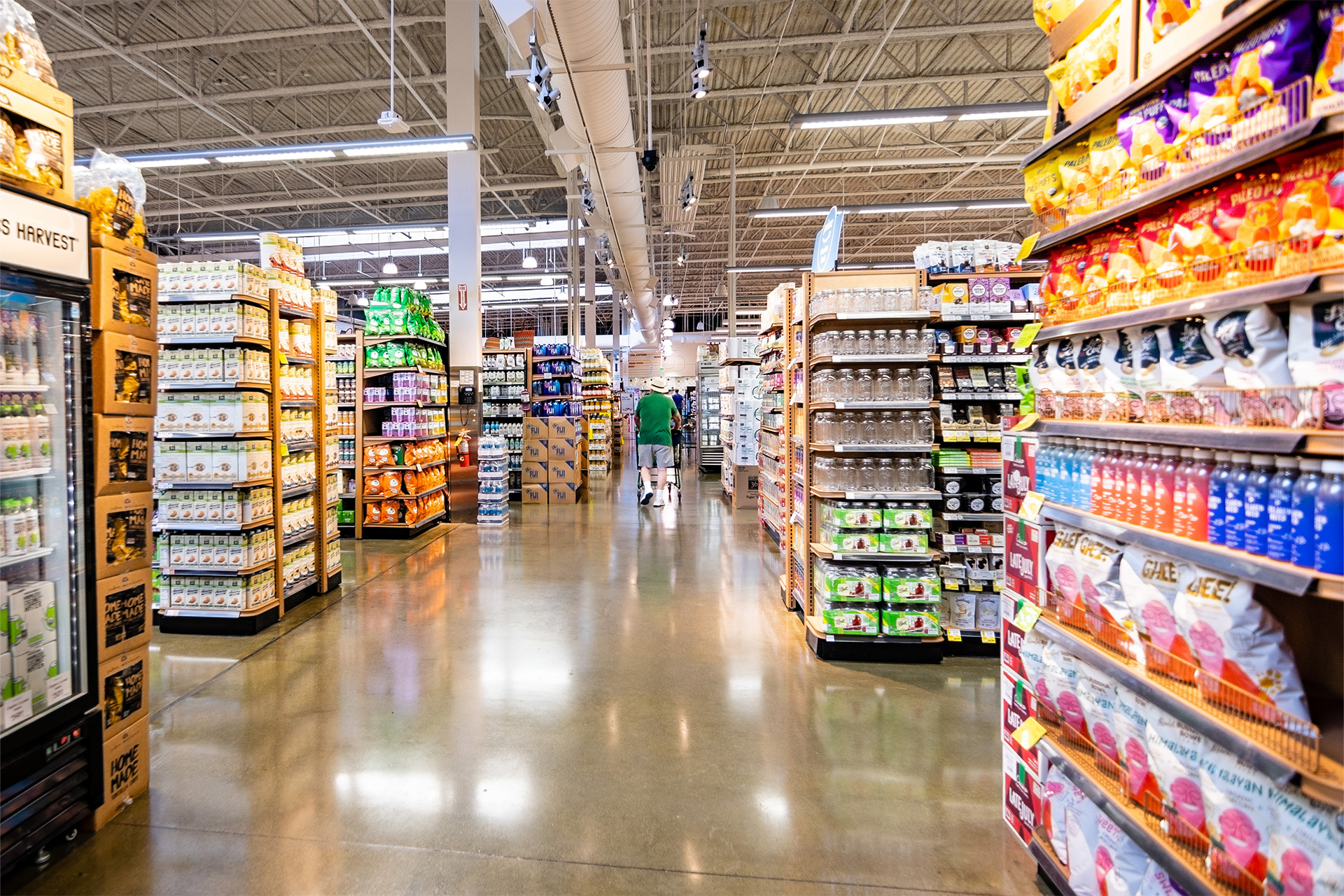
The ideal spaces for Aldi are in the 17,000- to 23,000-s.f. range, either end caps or inline sites. Aldi prefers to purchase the land/building for its upcoming stores, and will consider spaces in excess of 23,000 s.f., such as former Bed Bath & Beyond units. For new builds, Aldi seeks 2.5-acre pad sites. Space should be in community or regional shopping centers with a daily traffic count of at least 20,000 vehicles per day. Centers should be situated on the corner of a signaled intersection. Weekly errand co-tenants such as The UPS Store or F45 Training work well. Although Aldi originally sought out lower-income neighborhoods for its grocery stores, it is now considering spaces in wealthier suburban neighborhoods with a large number of millennials and older Gen Zs. Aldi is known for its efficient, no-frills approach to groceries, such as keeping items displayed in crates in order to keep costs down. Aldi also maintains its low prices by stocking 90% of its products with its own private labels.
Grocery Outlet plans to open between 45 and 55 new stores per year over the next three years. Future growth will take place in new markets for the brand, including Nevada and Ohio, two states Grocery Outlet first penetrated last year. The grocer is also eyeing growth into new Eastern states such as West Virginia, Delaware, Maryland and Upstate New York. Continued expansion will also occur in regions where Grocery Outlet already has a presence, because the grocery chain is making a concerted effort to cluster multiple units together within a four-mile range. Expect Idaho, California, Oregon, Washington, New Jersey and Pennsylvania to all see new grocery stores.
The real estate preferences for Grocery Outlet are inline or end cap spaces between 15,000 and 25,000 s.f. in neighborhood strip centers or power centers that are in close proximity to high-traffic retail shopping centers. Space can be in urban, suburban and rural markets. Ideal co-tenants are budget-oriented retailers such as Target, 99 Cents Only Stores and Old Navy, as well as eateries such as El Pollo Loco or McDonald’s. Grocery Outlet is an off-price concept which sells surplus inventory from well-known suppliers, such as General Mills or Nestle, at up to 70% reduced rates. Because the grocery outlet model is run by independent operators at each location, the stores can carry unique localized products in addition to nationally known brands.
Lidl has been experiencing some hiccups in its original U.S. real estate growth goals, such as laying off 200 employees at its U.S. headquarters last year and focusing on opening new stores in Eastern markets instead of the nationwide growth the brand originally intended. Regardless, Lidl will open new units at a rate of between 20 and 30 per year over the foreseeable future. With a new CEO overseeing U.S. operations and a new distribution center expected to open shortly in Falls Township, Pa., look for Lidl to focus on opening new grocery stores in the Philadelphia metro, as well as the surrounding states, including Delaware and New Jersey, in addition to expansion into the New York City metro area. Lidl also anticipates continued store growth in Washington, D.C., and Charlotte, N.C. The discount grocer will also consider purchasing small grocery chains in the future, such as its acquisition in 2018 of 28 Best Market stores, which are located in New York and New Jersey.
Spaces that Lidl considers are in the 14,000- to 30,000-s.f. range, and the brand prefers to own the property outright. Sites can be a standalone pad, an end cap or an inline space within a neighborhood retail center. Lidl also seeks retail street-front sites, including ground-floor units in mixed-use buildings, even in affordable housing projects. Urban, suburban and rural markets are all considered. Co-tenants should include other discount-oriented retailers, such as Burlington or Five Below. Much like Aldi, Lidl is also a German company, and keeps costs down by selling its own private labels and by displaying items within the original crate boxes instead of on the shelves. Shoppers also bag their own groceries after making their purchase.
CHEF’STORE is on track to open new units throughout the county at a rate of between three and seven per year. That number may increase to up to 10 to 15 per year by 2025 and beyond. Upcoming openings will take place in Augusta, Ga., a new state for the brand, as well as continued growth into Virginia, notably in Richmond. Anticipate further expansion into states where CHEF’STORE has a presence but is still underpenetrated, especially within Arizona, Texas, Oklahoma, Nevada and possibly Southern California. Expansion is also rumored to take place in growing population areas within a day’s drive from where its distribution centers are operated by US Foods Holding Corp., the foodservice company that owns CHEF’STORE. These include Birmingham, Ala., Knoxville, Tenn., Pittsburgh, Cleveland, Cincinnati, Albany, N.Y., Albuquerque, N.M., Boston, Perth Amboy, N.J., Omaha, Grand Forks, N.D., St. Louis, Detroit, Minneapolis, Indianapolis, Kansas City, Kan., Jackson, Miss., Denver and Chicago.
US Foods operated six CHEF’STORE locations — sprinkled throughout the Carolinas, Oklahoma, Arizona and Texas — before acquiring 70 Smart Foodservice Warehouse stores in 2020, and then converting them all to its own brand in March 2021. The store conversions bumped up CHEF’STORE’s presence in the Northwest, specifically in Northern California, Washington, Oregon, Nevada, Utah, Idaho and Montana. CHEF’STORE now seeks spaces in the 20,000- to 24,000-s.f. range, continuing the smaller format that Smart Foodservice Warehouse favored instead of its pre-acquisition CHEF’STORE units that could be as large as 50,000 s.f. Sites can be inline or end caps in neighborhood centers or power centers, as well as standalone buildings or outparcels of shopping centers. Second-generation sites such as former Lowe’s or Office Depot work well for the brand. New builds are also considered. Locations can be in both urban metros or smaller tertiary and secondary markets, provided there are a considerable number of independent restaurants in the vicinity. Co-tenants can include retailers that attract aspirational yet cost-conscious shoppers, such as Ross Dress For Less or Nordstrom Rack. CHEF’STORE is a wholesale restaurant supply concept that also sells groceries and kitchen supplies to the general public, without requiring a membership.