Eyewear brands continue to expand throughout all regions of the country, especially in convenience-oriented spaces, such as neighborhood grocery-anchored sites, that cater to the wide range of customers who need eye care services. These eyeglass tenants are recession proof, as customers will always need to update their prescriptions. All means of retail sites are ideal because the eyeglass brands run the gamut from high-end designer specialty stores for the luxury clientele, to mid-range priced shops for the middle-class audience, to affordably priced clinics that cater to the more rural, lower-income shopper. Because eyewear is such a personal item that is worn daily, discerning, fashion-conscious customers will want to try on particular frames and colors in person, rather than rely on website purchases. As recession concerns continue to prompt customers to curtail excess spending, costly eye corrective surgeries may be postponed, perhaps indefinitely, which further increases foot traffic into eyeglass shops. Look for My Eyelab, Stanton Optical, America’s Best Contact & Eyeglasses, Eyeglass World, Warby Parker, LensCrafters and Pearle Vision to all be scouting out new locations throughout the country.
Now Optics, whose retail eyeglass store brands are My Eyelab and Stanton Optical, has a goal of opening up to 75 new units per year over the next two years for the My Eyelab brand and up to 60 new units per year over the next two years for its Stanton Optical Brand. My Eyelab plans immediate franchise growth in untapped markets within Alabama, Iowa and Texas, with future growth focused on territories such as Phoenix, Salt Lake City, Detroit, Memphis and Nashville, Tenn., Cincinnati, Columbus, Louisville and Lexington, Ky., Orlando, Fort Myers and Tampa, Fla. My Eyelab specifically seeks more rural regions, as well as secondary and mid-sized metros with a large population of lower- to middle-income residents, for its affordably priced exams and eyeglasses. Space requirements are preferably end caps, in the 1,600- to 2,700-s.f. range, in outparcel or standalone buildings that can have food or dental co-tenants, such as Smoothie King or Aspen Dental. Nearby value-driven retail tenants, such as Walmart or Ross Dress for Less, are also ideal. My Eyelab keeps costs down and its square footage requirements to a minimum, by remotely operating customer procedures with opticians at its in-store visits, especially in smaller markets where such services are limited.
Stanton Optical will continue to expand in markets where it already has a presence, including Albuquerque, N.M., Fresno and Stockton, Calif., Madison, Wis., Shreveport, La., Miami and throughout Northeast Texas. Ideal sites are in family friendly regions outside of major metros, in areas experiencing population growth but that are still relatively affordable. Stanton Optical targets end cap or inline units between 2,800 and 5,000 s.f., in strip malls, freestanding pads, grocery-anchored centers or power centers, especially in areas near business parks and multifamily developments. Co-tenants can include other discount-oriented brands, such as Dollar Tree, and big-box department stores, including Kohl’s. Stanton Optical is known for providing quick, affordable eyeglass services with over 2,000 frames, including child-friendly options that feature Marvel, DC Comics and Disney characters.
National Vision, which is the parent company for both America’s Best Contact & Eyeglasses and Eyeglass World, anticipates opening between 65 and 75 new America’s Best units per year over the next two to three years, and between 10 and 15 new Eyeglass World units per year over the same time frame. America’s Best will be focusing its growth throughout the Midwest, specifically the lower-income suburban areas outside of Chicago, Kansas City, Mo., St. Louis, Chattanooga, Tenn., and Des Moines, as well as the communities stretching along Florida’s east coast, from Orlando to South Florida.
Ideal spaces are inline units, in the 2,800- to 4,500-s.f. range, at grocery-anchored centers, strip malls and power centers, with discount-oriented co-tenants, such as Great Clips or Marshalls. In an effort to appeal to the lower-income consumer, America’s Best recently reduced the pricing of its services, offering two pairs of eyeglasses for the price of one, along with a free eye exam.
Eyeglass World will be opening new units in the immediate future throughout the suburbs of Tucson, Ariz., Roanoke, Va., and Pittsburgh. Beyond that, look for growth in the Midwest and the South, in states where the brand is underpenetrated, including Texas, Tennessee, Kansas, Iowa, Illinois and Ohio. Eyeglass World prefers inline or end cap spaces, between 3,800 and 4,500 s.f., in strip centers, regional malls and power centers. Sites should be on a busy street in retail-heavy suburban communities or in metros near office parks that attract budget conscious yet fashion-oriented shoppers and families, with co-tenants such as Walmart, T.J. Maxx and Five Below. Eyeglass World prides itself on offering fashionable yet reasonably priced eyeglasses, along with competitively priced exams, in convenient locations.
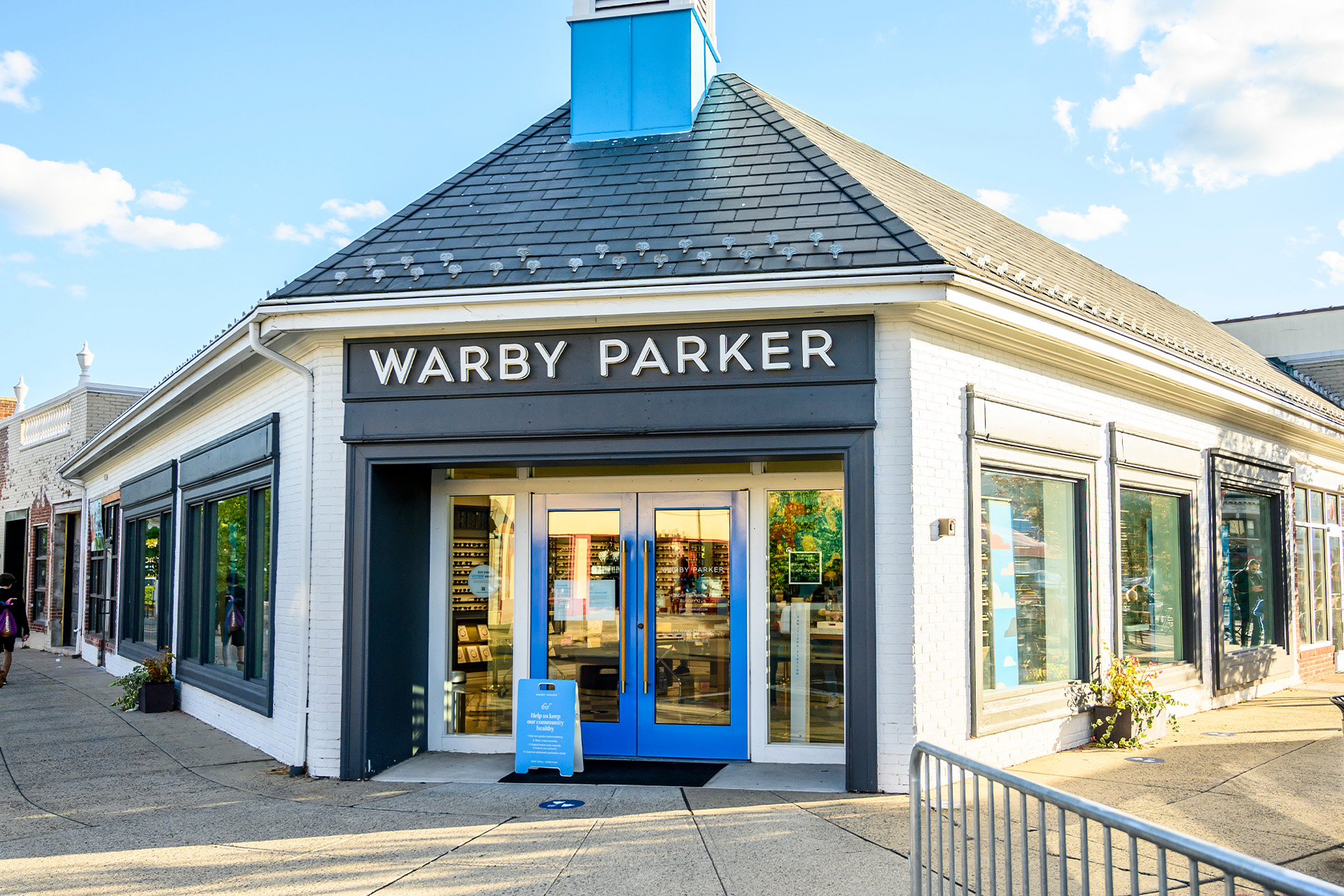
Warby Parker expects to open up to 40 new units per year over the next three to five years. The eyeglass retailer will be concentrating more on suburban locations rather than its previous preference for urban street-front sites. Look for Nebraska, Iowa, Arizona, Utah, Indiana, Louisiana, Wisconsin, South Carolina, Texas and Virginia to all be targeted for growth, especially within developing communities just outside of the major metros. Although the brand once targeted trendy, urban street-front retail sites, expect future growth to also take place in inline, end cap or even standalone units, in the 1,200- to 2,500-s.f. range, in indoor regional malls, power centers and lifestyle centers in both heavily populated and growing suburban areas with nearby office and multifamily developments. Preferred co-tenants include accessory brands popular with trend-setting millennials, such as Apple Store and Kendra Scott. The digitally native brand is adding eye exam capabilities to more of its stores and is known for its continuous array of new fashionable eyewear collections at reasonable mid-range prices.
EssilorLuxottica, owners of the LensCrafters and Pearle Vision brands, has already penetrated large pockets of the U.S., and will be prioritizing flagship store growth in major MSAs with a higher income demographic for its new LensCrafters units. As for its Pearle Vision brand, growth is expected to take place with franchise investors, as well as through its Ignite program, in which optometrists can still retain control of their business, while allowing a Pearle Vision conversion.
LensCrafters is on track to open approximately 25 to 30 new units per year over the next two years, with those openings being evenly distributed throughout the Northeast, the South, the Midwest and the West. LensCrafters has been relocating away from indoor regional mall sites to more convenient spots for its upscale shoppers. These spaces include open-air malls, grocery-anchored power centers and lifestyle centers for its suburban stores, and retail street-front sites, including mixed-use office buildings, for its urban stores. LensCrafters seeks space in the 1,500- to 4,000-s.f. range and prefers retail settings where higher end shoppers do their errands. Preferred co-tenants are those that appeal to the luxury or aspirational shopper, such as Trader Joe’s, Shake Shack, Dick’s Sporting Goods and Ulta Beauty. Last year, LensCrafters began rolling out flagship stores in the main urban retail center hubs of New York City, San Francisco and Palo Alto, Calif. These stores are between 2,400 and 3,500 s.f. and feature an expanded collection of tech-infused “smart” glasses and luxury eyeglass brands, such as Dolce & Gabbana, Burberry and Versace, as well as in-store LED walls and digital screens. Expect the top 50 MSAs, especially in areas with a strong tech-wealth community, to be targeted for more of these flagship stores in the future.
Pearle Vision is ramping up its franchise growth prospects and hopes to open up to 20 new units per year over the next two years. The brand is especially focused on growing in markets where it has a presence but is still underpenetrated, which includes the growing family friendly suburban areas of Salt Lake City, Birmingham, Ala., Nashville, Tenn., Miami, Boston, Raleigh-Durham, N.C., Louisville, Ky., Austin and San Antonio. Its average ideal space is 2,000 s.f., inline or end cap, in high-profile strip centers or grocery-anchored power centers on busy retail street thoroughfares near office parks. Preferred co-tenants should include a good mix of tenants popular with all age groups, including CVS Pharmacy, Crumbl Cookies and HomeGoods. Pearle Vision considers itself a brand that offers premium high-quality eyeglass service in a local neighborhood setting.