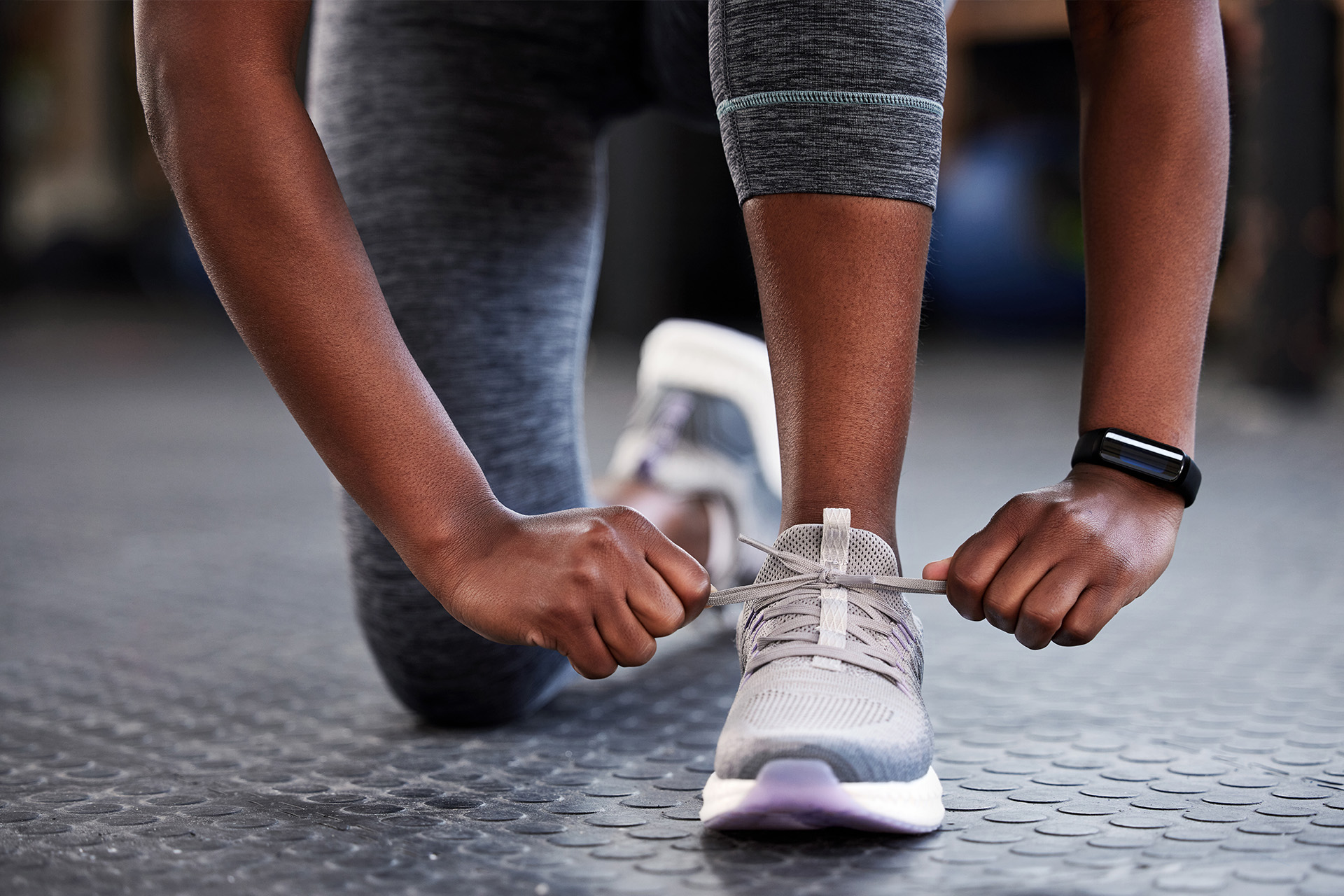
Americans are dedicated to fitness, and even if the populace ends up eschewing their gym memberships in order to save money, rest assured exercise will still be prioritized. There is an ongoing trend of consumers purchasing elevated, durable athletic shoes. Because in-store visits are necessary to ensure proper fitting, the continued viability of the athletic footwear tenant is practically a given.
In an effort to be competitive against larger department stores and sporting goods stores that also sell athletic footwear, many sneaker retailers have decided to not only branch out with their merchandise offerings, but to also reposition their stores into more easily accessible locations, such as neighborhood power centers. Many athletic footwear retailers are also consequently offering more localized products and services that cater to a specific market, in an effort to build a sense of community. Be on the lookout for European brands to especially be revving up their U.S. presence frequently with acquisitions. JD Sports, Nike, Foot Locker and Snipes are all footwear retailers launching massive expansion goals.
The U.K.-based JD Sports will be opening at least 550 new stores in the U.S. over the next five years with about half of that number expected to be conversions of existing Finish Line stores, a brand that JD acquired five years ago. The Finish Line store-in-stores within Macy’s, however, will not be rebranded. The remaining JD Sports openings will amount to about 55 to 65 new stores per year over the next five years, targeting markets in the West. There are rumors circulating that this expansion may include rebranding Shoe Palace stores, a retailer JD Sports acquired in 2020, which has a strong presence in the Sunshine states, including California.
The ideal locations for JD Sports are spaces in the 6,000- to 10,000-s.f. range, in indoor regional suburban malls, neighborhood power centers and urban street-front sites. Larger spaces up to 20,000 s.f. are also considered for JD Sports’ flagship locations in popular high-traffic tourist metro destinations, such as its 18,000-s.f. two-story store that opened in New York City’s Times Square in February. Co-tenants should include lifestyle attire brands that attract both male and female shoppers in the Gen Z/younger millennial age range, such as Hollister Co. or Zumiez. JD Sports specializes in selling outdoor-related footwear and fashionable sports-oriented lifestyle apparel.
Nike hopes to open between 75 and 100 new stores per year over the next two years. This is due to Nike’s efforts to reduce wholesale partnerships in favor of opening their own namesake storefronts. The future rollout will concentrate heavily on the “Well Collective” stores that Nike introduced this year, which was kick-started in June when 50 current stores were rebranded into the new concept. The Well Collective layout aims to capture more of the female athleisure lifestyle market with merchandise focused on holistic wellness and self-care mindfulness. About a quarter of the new openings will be “Rise” stores, which premiered last year in Miami and by this summer will have its third store opening in the NorthPark Center mall in Dallas. The Rise stores feature digitally technological advances such as a large LED screen, called “Sports Pulse,” that offers real-time hyperlocal sports related data. The remaining store openings are expected to be “Unite” themed stores, which feature more moderately priced items.
Each of the different Nike store concepts has its own ideal locations/sites. The Well Collectives will be in the 4,500- to 6,000-s.f. range, and be concentrated in luxury-infused lifestyle centers, mixed-use shopping districts and retail street-front spaces in urban and suburban metros. Popular co-tenants are those that appeal to upper income aspirational luxury female shoppers, such as Crate & Barrel and Anthropologie.
The Rise concept will target larger spaces in the 8,000- to 25,000-s.f. range, in Class A malls, lifestyle centers and street-front shopping districts within urban and suburban markets that attract high earning tech-savvy men and women. Preferred co-tenants include Apple Store and Faherty. The Unite store spaces targeted are also larger, in the 10,000- to 15,000-s.f. range, and can be standalone buildings, including former restaurants, as well as street-front sites, inline or end caps in grocery-anchored neighborhood power centers. The Unite stores can be in urban metros and suburbs, especially in ethnically diverse areas, and co-tenants can include family errand brands such as PetSmart or Michaels. Nike hopes that by opening more of its own stores it will not only elevate itself into a premium brand, but also reach a wider range of customers.
Although Foot Locker announced in March that it will be closing approximately 400 of its underperforming regional mall stores in the States by late 2026 — as well as 125 of its Champs Sports brand stores — the retailer will also be opening between 60 and 70 new stores per year over the same time frame. These new stores will be opening in off-mall sites, and the majority will be larger and focused on Foot Locker’s experiential “power store” concept that is heavily community-oriented, featuring hyperlocal brands and social gathering events in neighborhood locations. Foot Locker will also debut a brand-new format next year in New York City, to be called “Store of the Future,” which will appeal to a larger audience base by featuring a wider range of products with dedicated in-store areas for men, women and children. More of these stores, purported to be in the 15,000-s.f. range, are anticipated to open in street-front sites within primary U.S. markets.
The square footage for the “power store” versions of Foot Locker, which first debuted back in 2019 in Eastpointe, Mich., is between 8,000 and 10,000 s.f., which is much larger than the usual mall-based Foot Locker store that is in the 1,500- to 3,500-s.f. range. These power stores will continue to open in urban metro communities, especially in areas with a racially diverse population, in standalone street-front buildings and end cap or inline spaces in grocery-anchored power centers. Co-tenants can include high-traffic staples such as Walmart, Ross Dress for Less or Planet Fitness. Foot Locker will also continue to open more of its House of Play stores in similar sizes and settings, but in communities with a large family demographic, as these stores appeal to younger children with in-store physical play elements. Foot Locker will also open more of its off-price WSS stores, in the 10,000- to 15,000-s.f. range, in working class underserved urban neighborhoods, especially inline spaces in strip centers and standalone pads in California, Arizona, Nevada and Texas. Foot Locker, known for its trendy selection of sneakers and sportswear, expects to broaden its merchandise toward other types of footwear, such as Crocs, while its Champs Sports stores will feature more athleisure wear.
Snipes, the German-based hip-hop oriented shoe/apparel brand, continues to prioritize U.S. expansion mainly via acquisitions, and expects to open between 25 and 50 new stores per year over the next two to three years. With its sneaker store acquisitions over the last four years — namely, 170 units of Jimmy Jazz, 62 units KicksUSA, 35 units of Expressions and 31 units of Mr. Alan’s — Snipes has rebranded the stores into its own namesake, and now has a solid presence along the East Coast, the Midwest and the South. In addition to the acquisition sites, Snipes is also seeking second-generation spaces in downtrodden urban communities in need of a retail boost, such as its 8,800-s.f. store that opened in Chicago’s West Side in March, taking over a former Moe’s Furniture. As Snipes has stated it still plans on continuing to open stores in new U.S. territories, expect a push slightly further west, with untapped states such as Tennessee, Arkansas, Oklahoma, New Mexico and Colorado potentially being on its radar.
Snipes seeks a wide range of spaces, as small as 2,000 s.f. and as large as 10,000 s.f. All types of retail sites are considered, including urban retail street fronts, grocery-anchored shopping center units, neighborhood power centers and traditional indoor regional mall spaces. The brand is also open to spaces in disadvantaged communities, with co-tenants such as Dollar General or Family Dollar. Other preferred co-tenants include gyms, such as Planet Fitness, and popular food brands, such as Subway. Sites in close proximity to universities are also sought after, as its clientele consists of the Gen Z audience. Snipes frequently collaborates with hip-hop stars and rappers, such as its 6,000-s.f. street-front store that will open this month in Miami’s South Beach area, which is being designed with DJ Khaled. Snipes is known for its affordably priced street-style shoes and fashion.