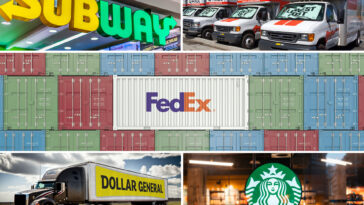
Even with numerous retailers adversely affected by coronavirus concerns, discount-value brands have been doubling down on their expansion efforts. These bargain retailers are swooping in on space vacated by other struggling brands. The time has never been better for discount retailers, as Americans are desperate for cost-saving options, especially for essentials. The younger Gen X/millennial shoppers especially enjoy seeking out brand name items at bargain prices. Brands such as Dollar General, DGX, Dollar Tree, Family Dollar, Five Below, all five of the TJX-owned retailers (TJ Maxx, Marshalls, HomeGoods, HomeSense and Sierra), Ross Dress For Less, dd’s Discounts, Burlington, Ollie’s Bargain Outlet and the new-to-U.S. Designers Market will all be increasing their brick-and-mortar footprint in the coming years. As for other competing brands, 99 Cents Only is currently struggling with debt restructuring and will not be increasing its store count, while Big Lots will be focusing on store remodels rather than expansion over the next two to three years.
Dollar-Format Stores Increase Their Footprint
Dollar General still anticipates opening 1,000 new units in 2020. The retailer is especially focused on expansion into the Northwest and recently entered the new states of Wyoming and Washington. Both states will continue to see new units this year. Northern California and Oregon should also expect new units, especially due the retailer’s 200,000-s.f. Sacramento, Calif., distribution facility that is expected to be completed by the fall. Midwest states will also see growth, coinciding with a new 630,000-s.f. warehouse in Walton, Ky., which is expected to be complete by January, and two 160,000-s.f. distribution facilities: one in Ardmore, Okla., (to be complete by spring of 2021) and one in Bowling Green, Ky., (to be complete by summer of 2021). The Dollar General unit averages 7,300 s.f. in freestanding or corner inline space and the brand positions itself in rural and low-income areas with a dearth of grocery chains and Walmart stores. Targeted demographics include a population where the median household income is less than $75K, and a minimum traffic count of 4,400 cars per day.
DGX, the smaller-format quick-service retail concept Dollar General first introduced in 2017, expects to expand into 20 new locations in 2020. The format seeks approximately 3,000- to 5,000-s.f. of ground-floor space in mixed-use buildings, including luxury Class A developments, within inline or corner units on busy metropolitan streets. The DGX concept is aimed at urban millennials seeking value and convenience, and the stores are near colleges, offices and medical facilities in both higher-end and lower-income neighborhoods within city zones. Units sprung up this year in Chattanooga, Tenn., Tulsa, Okla., Omaha, Neb., Clayton, Mo., Orlando, Fla., Des Moines and Indianapolis. This urban concept expects to do well with city shoppers preferring convenient locations amid COVID-19 concerns.
Dollar Tree, which also owns the Family Dollar store brand, anticipates opening 325 Dollar Tree stores and 175 Family Dollar stores in 2020 alone. Pre-COVID there was supposed to be 350 Dollar Trees and 200 Family Dollars slated for this year. Both brands, which currently make up 15,370 stores, are expected to increase their footprint at the same annual rate over the next six to seven years.
Dollar Tree seeks space between 8,000 and 12,000 s.f., with a minimum of 70 feet of frontage, in freestanding or inline locations along strong retail corridors with easy ingress/egress, and ample parking.
The brand prefers neighborhood or regional centers anchored by grocery stores or big-box discount retailers. Dollar Tree targets the middle-income demographic base in suburban areas. Dollar Tree plans to start selling alcohol at up to 400 of its stores this year. It will also continue its “Dollar Tree Plus!” concept in up to 100 of its stores, in which some of the merchandise will be offered at more than $1.
Family Dollar looks for space between 6,000 and 8,000 s.f., either standalone, inline, or ground-up freestanding, in both rural areas and urban neighborhoods without a big-box retailer, such as a Walmart. This brand focuses on the low- to middle-income demographic. After Dollar Tree bought the Family Dollar brand in 2015, Dollar Tree had been making adjustments, including closing 390 Family Dollar stores last year, and converting 200 units into the Dollar Tree brand. About 1,250 Family Dollars will be renovated this year to have an in-store “Dollar Tree” section and another 1,000 are expected to sell alcohol.
Bargain-Based Brands Seek New Space
Five Below currently has zero debt and expects to open up to 120 new stores in 2020 alone, a reduction from its original goal of opening 180 new stores this year pre-COVID. The retailer is anticipating approximately 150 new locations per year over the next seven to ten years. The brand is concentrating on growth in the West, beginning with increasing its presence in Colorado, Nevada, Arizona and California, and then expanding into additional western states. Five Below is breaking ground on a new 850,000-s.f. distribution center in Buckeye, Ariz., this year, which should be completed in 2021 and will help facilitate its continued growth into western markets. The retailer, which has 950 stores in the U.S., prefers inline space that averages 8,500 s.f. in regional power strip mall centers with multiple first class anchor and junior anchor tenants. Preferred co-tenants include Bed, Bath & Beyond, Old Navy, Ross, TJ Maxx and Dick’s Sporting Goods. Its target audience is the tween/teen shopper, and Five Below prefers a population of 100,000 or greater, with a high concentration of families and children. In addition to its merchandise being priced $5 and below, its future stores, as well as some remodeled stores, will have a “Five Beyond” section with a small selection of slightly higher priced items, in the $6 to $10 range.
This year Five Below partnered with Nerd Street Gamers, an esports gaming service, and will test out the concept of utilizing approximately 3,000 s.f. of space adjacent to a limited number of its stores for in-person gaming events (COVID-19 restrictions permitting). If successful, Five Below is prepared to open up to 70 more such locations over the next three years.
TJX Companies is still going strong with its expansion goals. Its TJ Maxx and Marshalls brands expect to open approximately 35 and 25 new stores per year, respectively, over the next 10 to 15 years. Its HomeGoods brand anticipates opening 65 new stores per year over the next six years, and HomeSense expects to open approximately 15 to 20 new stores per year over the same time period. Lastly, the Sierra concept, which sells discounted outdoor-related brands, is prepared to open about ten new stores per year over the next three years.
These brands seek space that averages at 30,000 s.f., with the exception of Sierra, that looks for space at approximately 18,000 s.f. Sites are sought after within all markets in urban, suburban and rural communities, and within all demographic ranges (low, mid and high income) in regional strip mall centers with similar discount-themed tenants, major grocery store chains and high-traffic retailers such as Starbucks and CVS Pharmacy. Most of these TJX stores have at least two of the store brands clustered together. Many of these branded stores are taking over former big-box spaces.
As for the Sierra stores, they are primarily based in the Northeast, Northwest and Midwest within strip malls near more suburban and rural communities, within close range of outdoor lake and mountain activities such as hiking, backpacking and fishing. This brand appears to have great potential for growth, even into Sunbelt states, as consumers become increasingly interested in value-priced gear and products that cater to healthy, outdoor activities amidst COVID-19 concerns and related gym closures.
Ross Dress For Less remains on track to open 75 new stores per year, over the next 15 years. Its sister brand, dd’s Discounts, is expected to open 25 new stores per year over the same time period.
For both brands, immediate markets targeted for growth include Virginia and Ohio, both new states the retailers expanded into last year, as well as the Carolinas, Florida, Texas, Illinois, Arkansas and Kentucky. Indiana is specifically being eyed for new dd’s Discounts development. Texas and its surrounding markets are expected to see major growth for both brands in 2021 and beyond, coinciding with a two million-s.f. distribution center expected to be completed by 2021 in Brookshire, Texas. The Carolinas and Florida will also be supported by a $68M expansion of Ross’ distribution center in Rock Hill, S.C. Ross’ average square footage space is 26,000 s.f., while dd’s Discounts is 23,000 s.f. Ross locates itself in shopping centers, power centers and regional malls within mid-level income areas in both urban and suburban communities. As for dd’s Discounts, the brand positions itself in established shopping centers and strip malls within densely populated urban and suburban areas with lower-to-moderate incomes.
Burlington anticipates opening approximately 50 to 60 new units per year over the next five years, concentrating its growth in the Southeast, South and West. After realizing its smaller-sized stores required smaller inventories and allowed for improved customer service, the retailer will continue to reduce its square footage size with its future stores, preferring the 35,000- to 40,000-s.f. range going forward. Just three years ago, Burlington’s average square footage was in the 50,000-s.f. range. Burlington even expects to have a unit at 30,000 s.f. in 2021, when it takes over the former Best Buy, situated next to an Ulta Beauty, in the Avenue Murfreesboro open-air regional shopping center in Murfreesboro, Tenn. In July, Best Buy moved to a larger, 42,226-s.f. former David’s Bridal space in the same shopping center. The brand seeks freestanding space, as well as anchor units in strip centers, power centers and malls, preferably with other off-price retail co-tenants. Burlington prefers a 200,000+ population within a three-mile radius for downtown urban trade areas, a five-mile radius for suburban trade areas and a 10-mile radius for rural trade areas. The chain expects to continue occupying former Toys “R” Us and Sports Authority spaces. The brand hired the former COO of Ross late last year, and is making a conscious effort to focus on brick-and-mortar growth by eliminating its e-commerce platform in March.
Ollie’s Bargain Outlet expects to open approximately 45 to 50 new stores per year over the next ten to fifteen years, focusing on the South, Midwest, Southeast and the Mid-Atlantic states. Look for Tennessee, Kentucky, Texas and Indiana to be the focus for growth in the near future. With its square footage space between 25,000 and 40,000 s.f., Ollie’s looks for second generation sites, especially big-box warehouse-style spaces, either in inline strip malls or freestanding units, and the retailer filled 14 former Toys “R” Us units last year. Ollie’s positions its stores along major retail corridors within suburban and rural areas. Ollie’s offers constantly-changing merchandise culled from overstocks and closeouts, including well-known brand names priced up to 70% off, as well as its own private label brands.
European-based multi-brand fashion group, DK Company, is bringing its reduced-rate luxury clothing retail store, Designer’s Market, to the U.S. and opened a 10,256-s.f. unit in the Dania Pointe mixed-use development in Dania Beach, Fla., in June. Future square footage preferences will average 5,000 s.f. and the brand is seeking nationwide expansion in all major metropolitan areas. Designers Market is expecting to add three to five new stores per year over the next three years in A/B+ malls, lifestyle centers and major mixed-used developments with fashion retailer co-tenancy. Designer’s Market sells all of the DK Company’s brands under one roof, which consist of affordable European-style fashions.