Many Mexican restaurants, especially the fast-casual and drive-thru establishments, are thriving with expansion. Mexican food is especially attractive in today’s uncertain economic climate as its food is traditionally at a cheaper price point and is already set up for easy to-go orders. Many Mexican restaurant chains are providing options attractive to the younger millennial crowd such as online/app ordering capabilities, healthier dining choices, alcoholic drinks and upscale/urban inline locations. Suburban sites will also be sought after, as millennials are moving away from urban living and beginning to start families. There had previously been a trend with urban inline and college-centered locations, especially with Taco Bell’s “cantina” style restaurants, but now suburban locations appear to be the focus going forward, especially in light of extended coronavirus quarantine concerns. Look for Taco Bell, Chipotle, Moe’s Southwest Grill, Torchy’s Tacos, Taco John’s, Qdoba Mexican Eats, California Tortilla and Del Taco to be increasing their brick-and-mortar footprints throughout the country.
Taco Bell expects to open about 1,800 more units in the U.S. by early to mid-2023. At least 300 of these new units will be its “cantina” style inline restaurants without drive-thrus that serve alcohol and offer an updated healthier menu. Taco Bell debuted this format during 2015 in urban locations, tourist spots and college towns. There are currently 30 U.S. cantina locations, and an additional 30 inline spaces that do not serve alcohol. Cities expected to get more of these inline cantinas including New York City, Detroit, Pittsburgh, Nashville, Orlando and Southern California coastal towns. New York City alone, which currently has nine of these cantina-style units, will get 40 more cantinas in inline spaces, including two multi-level units expected by the end of this year: a 4,610-s.f. cantina in Midtown and a 4,000-s.f. cantina in Times Square’s Paramount building. These cantinas can take up space from 2,500 s.f. to the largest cantina unit, a 6,000-s.f. space in Las Vegas. Taco Bell will debut a cantina that features a video game playing component this fall in San Ramon, Calif. The eatery will also test out converting at least three traditional suburban restaurants into cantinas. Apart from its inline configurations, Taco Bell seeks standalone buildings between 1,600 and 2,700 s.f., in lot sizes between 21,000 and 28,000 s.f. with drive-thrus in suburban areas.
Chipotle will most likely increase its original forecast for 165 new units by mid-2021, as the brand has no debt and intends to swoop in on vacant real estate space caused by the coronavirus. In June the brand agreed to lease a 2,650-s.f. space vacated by Northpoint Sweet Burrito in Spokane, Wash., as well as a 2,668-s.f. former Circle K gas station in Albuquerque. In May, Chipotle agreed to lease two spaces in Manhattan which were vacated by Boston Market — a 2,100- and 2,800-s.f. space. Chipotle is testing out a new express format store design at urban street-front locations, which will have fewer seats, walk-up ordering windows and pick-up shelves. These new express formats will be tested out in Cincinnati, San Diego and Newport Beach, Calif., as well as existing units that will be remodeled: two in Phoenix and two in Chicago. More than half of Chipotle’s expected new units will feature the “Chipotlane,” a drive-thru specifically for pre-orders via its app or its website, which Chipotle debuted last year. The restaurant looks for space that averages 2,550 s.f., either freestanding, inline or endcap, near college campuses, shopping centers or business districts. The fast-casual chain currently has 2,619 company-owned units in the U.S.
Moe’s Southwest Grill hopes to open up to 300 new units in the next three to five years, adding to its 708 units in 40 states primarily throughout the eastern portion of the country. The franchise restaurant seeks out 2,100 to 2,800 s.f. of space in inline, endcap or freestanding conversions, with outdoor patio seating. High-visibility locations with at least 30 parking spaces in convenience centers with a strong anchor, such as a grocery store, will be sought after. Preferred demographics are those aged 40 and below, with a 30,000 minimum population, a workplace population of 15,000 and a $50K+ median income. Suburban and urban locations near schools, sports facilities, parks and theatres are sought after. The restaurant signed on to be the first tenant in an endcap unit at a new shopping center in Eatontown, N.J., called Plaza 35 Village, which will be an extension of the current Plaza 35 retail strip that houses a Dunkin’ and a Ricciardi Brothers paint shop. Moe’s hopes to open this unit by fall of this year.
Moe’s introduced a smaller 1,000- to 1,500-s.f. footprint format that it expects to roll out in or near colleges and medical offices, which will feature the self-order digital kiosk-only setup with limited seating. The first of this format opened in June at a former Popeyes, in the college town area of Oakland within the Pittsburgh MSA with seating for 15. Another such unit is expected to open before fall in Charlotte, N.C., with seating for 40. The brand also hopes to convert many of its franchise units with kiosk option setups.
Although fast-casual Torchy’s Tacos currently has 71 units in four states (Arkansas, Colorado, Texas and Oklahoma), the brand anticipates opening approximately 100 new units by late 2023. The chain will first expand into Kansas City, Mo., Baton Rouge, La., Wichita and Olathe, Kan., and Tennessee, followed by further growth into Indiana, Georgia, New Mexico, Utah, Kentucky, Mississippi, Nevada and Arizona by 2025. The typical Torchy’s is approximately a 3,500-s.f. endcap space in regional shopping centers and strip malls, ideally near urban and suburban colleges, as most Torchy’s units serve alcohol. Preferred communities should have an average household income of $100K within a three-mile radius. The company-owned restaurants are non cookie-cutter with its space configurations. As of 2020, units will feature a “Kitchen 2.0” design which should reduce wait times, include space for hand-rolling fresh in-store tortillas and cooking up fresh meat in favor of reheating meat. Torchy’s is known for its unique, constantly changing taco ingredients, with such combinations as grilled shrimp, chopped bacon, grilled pineapple and barbecue sauce, as well as ahi tuna, wasabi sour cream, and apple, mango and carrot slaw.
Taco John’s anticipates opening 15 new restaurants this year, 25 next year and 50 new restaurants in 2022. With 388 restaurants, the franchise, which had been in smaller rural markets in the upper Midwest, plans to expand into more mid-sized cities in states where it already has brand recognition, as well as new states within the Midwest and the Southeast. The restaurant is focused on Milwaukee, Indiana, Illinois, Kentucky, Tennessee, Ohio and the Carolinas. Taco John’s, which prefers conversions, looks for space at busy intersections for its units between 1,900 and 2,100 s.f., which can be standalone, inline or endcap with space for a drive-thru. Space should be on a lot between 22,000 and 30,000 s.f. with approximately 25 parking spots and seating for about 50 people.
Taco John’s preferred co-tenants include Walmart, Home Depot, and popular restaurants, such as Five Guys, as well as competing restaurants, including Taco Bell and Chipotle. By seeking out suburban locations, it plans to capture the younger modern millennial family, with parents in their mid- to late 30s, as well as the college crowd. Watch for Taco John’s to roll out a new prototype that has a more urban appearance, kiosk ordering, a refreshed menu with healthier dining options such as tortilla-less bowls, and a new marketing campaign geared to these younger millennials.
Fast-casual franchise Qdoba Mexican Eats expects to expand with 25 to 50 new units over the next two to three years, with approximately 15 new units in the Southeast, especially in Atlanta and Alabama, and approximately six to 10 new units expected in New York City and New Jersey. The chain currently has 736 locations. Other hot markets where Qdoba is seeking franchise development include Arizona, Southern California, Las Vegas, New Mexico, Pennsylvania and Houston. Qdoba hired a new director of franchise development in early 2020 and anticipates continued growth in upper middle class markets and college towns. Qdoba looks for endcap and freestanding buildings at 2,000 to 3,000 s.f., preferably with a patio, in regional and neighborhood shopping centers, as well as large metropolitan areas with ample parking. The restaurant does not have a drive-thru with its current prototype configuration, but the brand may include it in future prototype designs, as it has two endcap units in Wisconsin that contain drive-thrus.
California Tortilla, a fast-casual franchise with 39 units in nine states primarily along the Mid-Atlantic, expects to open 10 to 15 new units per year over the next five years. The brand is focused on expanding its footprint in its home state of Maryland, specifically throughout Montgomery County’s Silver Spring and Clarksburg neighborhoods, in addition to eyeing further growth in Kansas, Richmond, Norfolk and Virginia Beach, Va., Nashville, Memphis and Knoxville, Tenn., Atlanta and North Carolina. The franchise seeks out approximately 2,500 s.f. of space in large metropolitan inline storefronts and inline and endcap suburban locations in strip malls, in addition to food court spaces in malls, college campuses and airports. Known for its “Wall of Flame” featuring 75 different hot sauces, California Tortilla introduced a new assembly-line prototype format that debuted at its Hixson, Tenn., unit which opened last October.
The Del Taco franchise, with 580 locations across 15 states, will expand its presence in the Southeast and the West Coast over the next three to seven years. Chattanooga, Tenn. and northern Georgia are hot spots for expansion, along with Washington state with sites planned in both Yakima and Spokane. The Reno and Lake Tahoe market expects to get 10 new units by 2022, and San Diego will see 16 new units developed over the next seven years. Del Taco is hopeful to sign on additional multi-unit franchise operators for California’s Central and Northern territories, as well as throughout the Pacific Northwest.
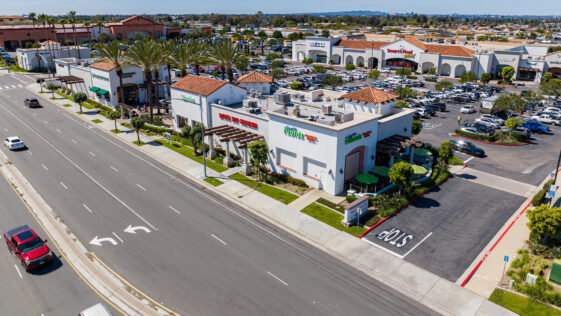
Del Taco has multiple prototypes to accommodate many real estate space configurations, whether freestanding, conversion, or end-cap locations. The franchise’s traditional prototypes, for a 25,000-s.f. Lot, include a 2,420-s.f. unit plus a patio and a 2,000-s.f. prototype unit plus a patio. As for conversions, Del Taco prefers former restaurant space at 1,500 to 3,200 s.f. that can seat between 25 and 50 persons. The chain looks for 25 to 30 parking spaces and a minimum eight-car drive-thru capability. Its preferred demographic is a high concentration of 18- to 49-year-olds with a median household income between $40K and $100K. It seeks a residential population of about 35,000 with a daytime trade area of at least 10,000. The nearest intersection should have a minimum of 25,000 cars per day.