The average customer may think of a seafood restaurant as a formal full-service extravagant ordeal with a hefty price tag. But the fish-themed restaurants that are currently trending with growth are the ones that emphasize a more down-to-earth, family friendly and affordable dining experience. Many of these brands specialize in the southern-style Cajun crab boil plates where customers don bibs and gloves for a meal that is informal and fun. The growth of seafood establishments is in response to today’s consumer preferring healthier options, as well as a desire for something different than the ubiquitous burger and chicken establishments.
Second and third generation standalone or end cap restaurants work best with these casual seafood restaurants, which tend to be in family-oriented communities filled with 20- to 45-year-olds and their children. Locations near business parks, colleges and tourist-heavy destinations also appeal to these lively fish-themed tenants. All types of co-tenants are ideal, such as non-competing family-themed eateries, fitness centers, supermarkets, gas stations and department stores. Be on the lookout for Crab Du Jour, Angry Crab Shack, Hook & Reel and Captain D’s to be the leaders in this category that are focused on national expansion.
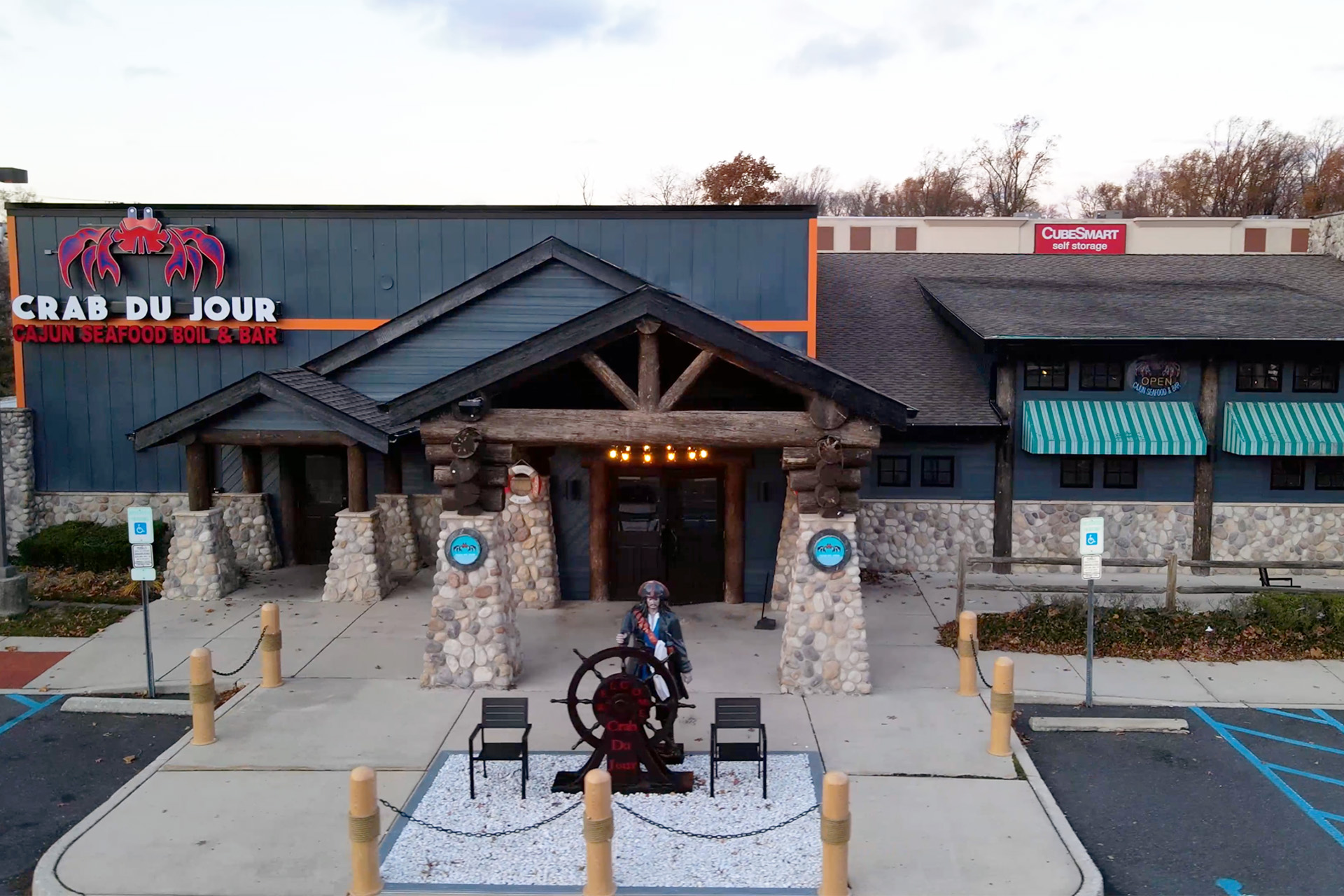
Crab Du Jour anticipates opening between 30 and 40 new units per year over the next three to five years and that number may amplify with the onset of the brand franchising its restaurant. With a strong presence in much of the Mid-Atlantic markets, look for Crab Du Jour to concentrate its immediate growth within the MSAs of Pittsburgh, Atlanta, Tampa and Orlando, Fla. Beyond these markets, the seafood chain hopes to continue its trajectory toward more Midwestern and Western regions, focusing on Cleveland; Cincinnati; Louisville, Ky.; Memphis, Tenn.; Milwaukee; Madison, Wis.; St. Louis; Kansas City, Mo.; Tulsa, Okla.; Dallas; Houston; Denver; Omaha, Neb.; Saint Paul, Minn.; Bismarck, N.D.; and Sioux Falls, S.D.
Square footage requirements for Crab Du Jour should be between 8,000 and 12,000 s.f. for its traditional dine-in restaurants and 1,500 to 2,000 s.f. for its express units, which have limited seating. Its traditional units work best in street-front second-generation standalone restaurant pads and end caps of neighborhood power centers. The space should be able to accommodate a large bar and a stage. Its express units work best in strip centers and retail street-front sites in more densely populated urban markets, either inline or end cap spaces. Co-tenants in the vicinity should include other family-oriented brands, such as PetSmart, Five Below and Baskin-Robbins. Crab Du Jour appeals to the 25-year-old and older audience with young children, as it is a family friendly bar/restaurant in the same vein as Applebee’s or TGI Fridays. The restaurant is famous for its Cajun-influenced seafood boils that are served in a bag that is shaken up tableside for a fun presentation. Guests can choose their seafood protein, sauce and spice level and can add such extras as potatoes or corn.
Angry Crab Shack has a goal of opening between 25 and 30 new units per year over the next three years. With immediate franchise growth taking place in Houston, Dallas/Fort Worth, the greater Seattle area, Atlanta and Salt Lake City, upcoming franchise expansion targets will include the greater Phoenix region, such as Scottsdale, and the metros in South Carolina, Indiana, Colorado, Kansas, Michigan, Missouri, Delaware, Hawaii and New Mexico. Angry Crab is especially targeting college towns, growing family friendly communities and tourist-heavy destinations alike, including spaces at highway exits near gas stations. Ideal sites are second or third generation standalone buildings facing a busy street, which can be part of a power center or grocery-anchored center, as well as end caps in retail strip centers that are between 5,500 and 6,500 s.f. in size. Though end caps are preferable, Angry Crab Shack will consider inline units. The chain seeks co-tenants such as hotels, including Courtyard by Marriott, gas stations, convenience stores, souvenir shops and other bar/restaurants, such as Hurricane Grill & Wings, in the vicinity.
Angry Crab Shack is known for its affordably priced Asian-Cajun seafood boil fusion plates with menu items that can be mixed and matched with spice, sauce and protein options.
Hook & Reel anticipates opening about 25 new units per year over the next two years. The brand, with a presence still heavily growing in the East Coast states, especially New Jersey, New York, North Carolina and Florida, in addition to an expanding unit count in Texas, is now focusing on Midwest and Western states for growth. Look for Kansas, Utah, Idaho, Ohio, Colorado, Arizona and California to be targeted for new franchise units going forward. Hook & Reel looks for second generation restaurant space in the 5,000- to 10,000-s.f. range in standalone parcel buildings, including spaces in grocery-anchored centers or power centers, as well as inline regional mall spaces with an entrance facing the exterior parking on a busy street. Sites should be in a family friendly urban or suburban community near office buildings, as well as near big-box high-traffic tenants, such as Staples or Target. A university or a community college in the vicinity is also ideal.
In January, Hook & Reel debuted Snap Back, a smaller-format, fast-casual version of its full-serve restaurant, in a 2,400-s.f. inline unit in a Newark, N.J., retail building that shares a parking lot with a ShopRite. The co-tenants in the building include Popeyes and uBreakiFix. Three more Snap Back restaurants are expected by late 2022, with two in New Jersey, and one in North Carolina. If these smaller-sized fast-casual restaurants perform as well as expected, anticipate a bigger rollout of the concept in 2023, in higher density urban markets near multifamily developments. Hook & Reel serves Creole/Cajun-inspired seafood in a mix-and-match method in which the customer chooses from a variety of seafood protein options, sauce choices and spice levels.
Captain D’s anticipates opening between 15 and 20 new units per year over the next two years through franchise growth. Look for Florida, especially Lakeland and Ocala, to be targeted. The brand is also seeking spaces in the Midwest, especially within the Milwaukee and Chicago MSAs. In the South, growth will be especially strong in the metros of Oklahoma, Mississippi and Arkansas, and in the MSAs of Dallas, Fort Worth, Memphis and Atlanta. Captain D’s will also zero in on new units in Salt Lake City, with Utah being a new state for the brand. Continued growth is also expected in Michigan, Pennsylvania and Ohio, and new states being eyed for franchise growth include Arizona, Nevada, Idaho, Nebraska and Iowa. Captain D’s is especially focused on expansion after the brand was acquired by the private equity firm Centre Partners Management in May.
With different prototypes available, Captain D’s will look for space as small as 960 s.f. for its express format, which offers a drive thru and a walk-up window with no indoor seating. The express prototype, which first rolled out last year, enables Captain D’s to open in more heavily populated urban markets in areas with strong foot traffic. Last year the chain also introduced a double drive thru in Tupelo, Miss. Additional prototypes are 1,598 s.f. for its 22-seat configuration, 1,964 s.f. for its 44-seat version and 3,022 s.f. for its largest 95-seat unit restaurant. Captain D’s especially looks for standalone second-generation drive-thru buildings, and has successfully converted former Taco Bell, Arby’s, Starbucks, Church’s Chicken and Bojangles units. Standalone pads in suburban markets are sought after, which can include outparcels of strip centers, grocery-anchored centers or power centers. Sites should be on a major thoroughfare near a gas station, such as Shell. Captain D’s is known for its affordably priced seafood dishes, such as batter dipped fish, grilled shrimp, seared salmon and fish sandwiches.