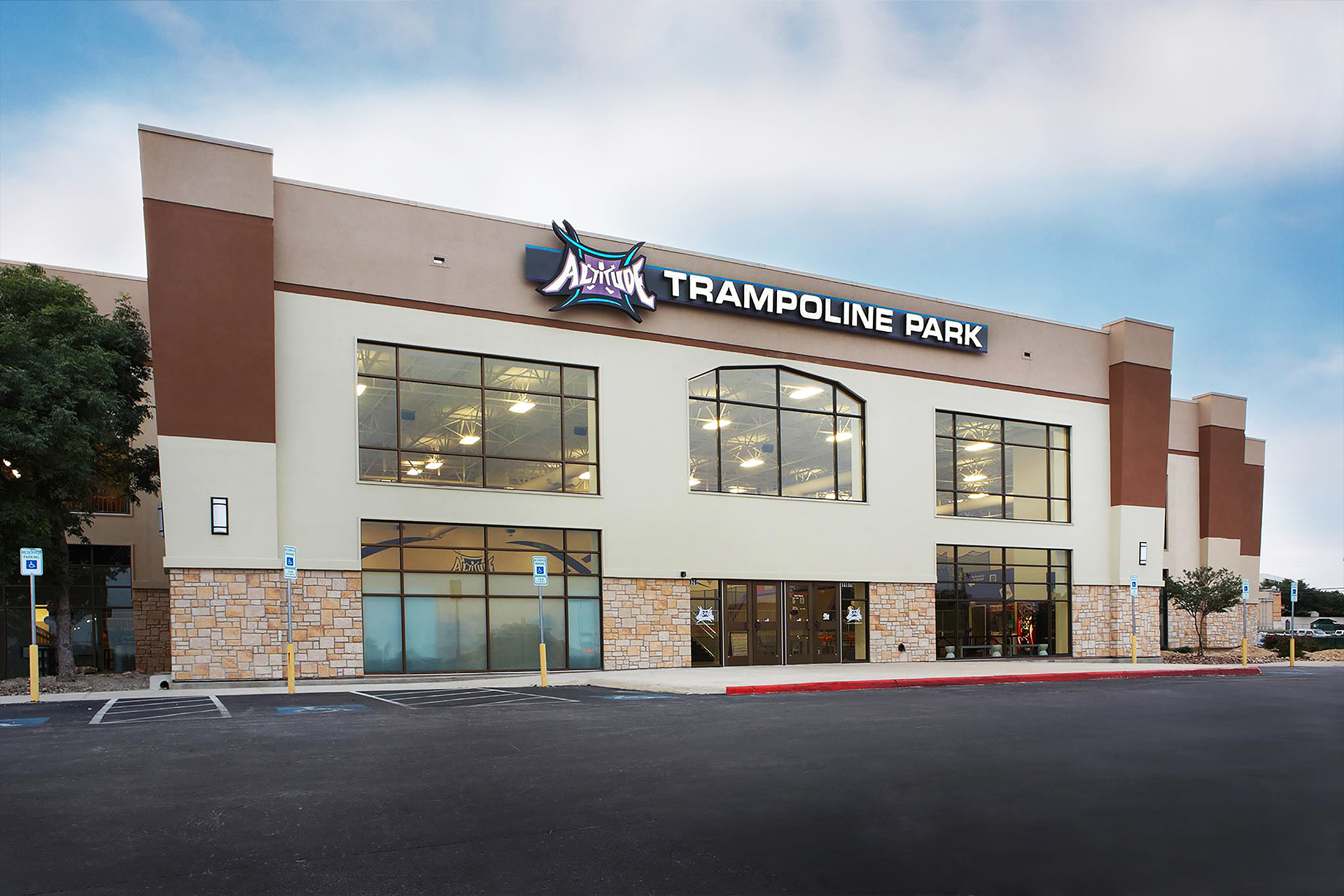
Look for indoor family fun centers that focus on physical movement to be trending with growth. Though the earliest models of these family fitness fun centers were primarily focused solely on trampolines for the younger age set, trampoline parks now offer more features to appeal to a wider range of customers. Some of the new activities offered include ninja warrior-themed obstacles courses, ropes courses, zip lines, dodgeball and basketball trampoline courts, bowling, slides, laser tag, go karts, foam pits, arcades, bumper cars, cafes and even bars that serve alcohol.
The active element in these trampoline-esque parks attracts millennial and younger Gen Z customers that are interested in health and wellness, while also appealing to parents who want to make fitness fun for their younger family members. With many of these destinations offering memberships, drop-off camps and birthday party packages, frequent traffic is a given. These types of tenants can easily take over part or all of an empty retail anchor space, provided there is a ceiling height of at least 17 or 18 feet. Former Sports Authority, Stein Mart or Toys ‘R’ Us stores work well for the trampoline park tenant, in addition to vacant standalone buildings or warehouse spaces. Anticipate Urban Air, Sky Zone, Altitude Trampoline Park, Launch Trampoline Park and FunCity Adventure Park to all be seeking new sites throughout the country.
Urban Air, owned by Unleashed Brands, will continue to expand at a rate of about 30 to 40 new units per year, with a focus on eyeing untapped markets throughout Arkansas, Virginia, Massachusetts, Maryland, Michigan, Rhode Island, Pennsylvania, Washington state and especially throughout California. In California, new units will be popping up in Yuba City, Fresno, Bakersfield and Elk Grove. Areas targeted for future expansion include Stockton, Ventura County, Orange County, San Bernardino County, Riverside County, Santa Clarita, Pasadena and San Diego. Urban Air currently has at least 130 units in various stages of development.
The franchise looks for space that is generally between 40,000 and 50,000 s.f., but will consider sites as small as 20,000 s.f., and as large as 85,000 s.f., such as its 84,200-s.f. unit in Orange, Conn. Sites can be standalone buildings, inline units or end caps of neighborhood power centers and grocery-anchored centers. Space should be in a growing or thriving suburban or semi-rural community. Preferred co-tenants are retailers that attract all members of a family, such as Target, Tillys, Hibbett Sports or Petco. Urban Air allows franchisees to be flexible with which attractions will be featured in a particular location. In addition to trampolines and a café, the brand offers options such as dodgeball, laser tag, go-karting, obstacles, bumper cars, bowling, rock climbing and even indoor sky diving.
Sky Zone plans to open approximately 20 new indoor park facilities per year over the next two years. Its growth continues to expand westward. Texas, Colorado and Southern California are targeted for continued growth, and Utah will be seeing its first unit this year, in Sarasota Springs. Additional expansion will take place in all other U.S. regions, with Burlington, N.C., Rutherford, N.J., South Florida, and Virginia Beach, Va., all expected to see new units by late 2023 or early 2024. The brand recently hired a new chief development officer, as well as regional vice presidents, which indicates Sky Zone is preparing for increased expansion goals in the future.
Sky Zone seeks space between 15,000 and 30,000 s.f. in suburban neighborhood strip malls and power centers, inline or end caps, with other family-oriented co-tenants such as Walmart or Marshalls, or non-competing entertainment brands, such as Regal Cinemas, as well as fast-food restaurants, such as Subway.
Standalone building and warehouse units will also be considered, including industrial park space near residential neighborhoods. Sky Zone offers enthusiasts of all ages numerous options besides trampolines such as zip lines, slides and dodgeball courts, as well as snack bars.
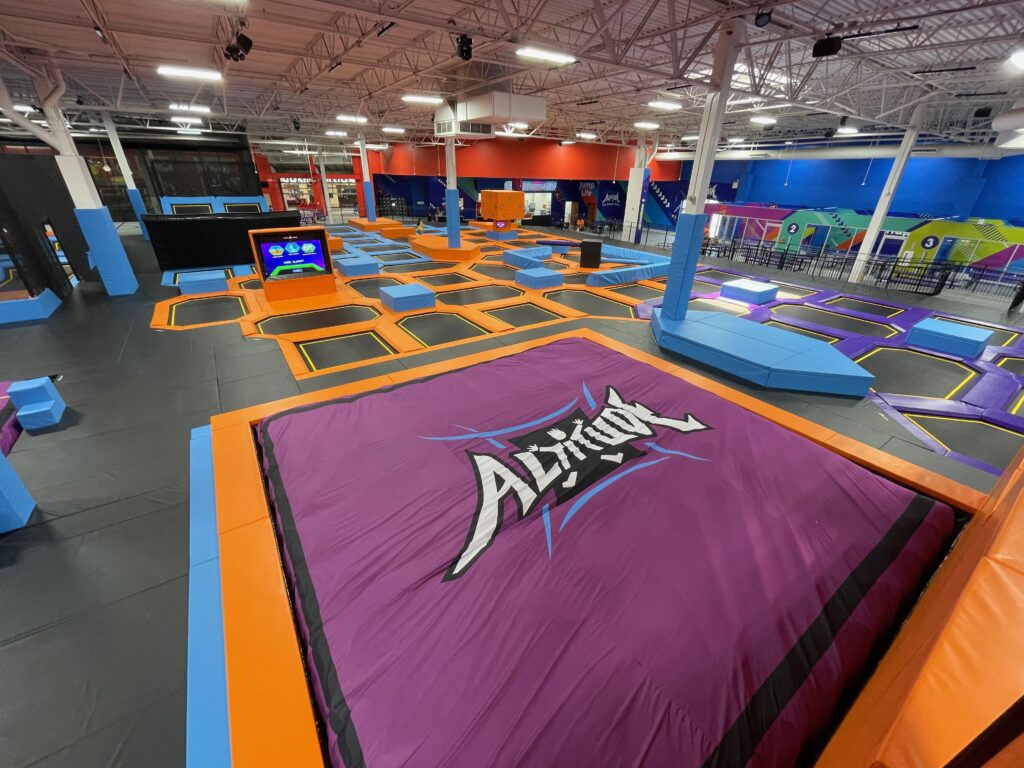
Altitude Trampoline Park anticipates opening about 15 new locations in 2023 followed by 20 new units per year in 2024 and beyond. Future expansion will be concentrated on all markets in the country, with an immediate focus prioritizing the Midwest, the Great Plains and the Southwest. For example, expect to see growth in states such as Indiana, Michigan, New Mexico, Virginia, South Carolina and Denver. In addition, recent franchise agreements have been signed to open new parks within New England, as well as in Paso Robles, Calif., Austell, Ga., and Oklahoma City.
The ideal build-out space for an Altitude Trampoline Park is between 20,000 and 30,000 s.f., usually an anchor spot or a secondary tenancy site in suburban power centers or strip malls. Vacated big-box retail sites work especially well for the brand, such as former Best Buy or Winn-Dixie stores. Altitude differentiates itself from the other trampoline-type family fun centers because its main demographic base is the 3- to 12-year-old age group, so areas brimming with a growing population of young families are sought after. The brand isn’t preoccupied with positioning itself near particular co-tenants, but the retail site should be in a thriving family community with ample schools and parks nearby. Altitude has recently introduced new augmented reality (AR) compatible digital immersive experiences at select locations, which can allow users to record and playback their jumps for improvement purposes.
Launch Trampoline Park has a goal of opening approximately 15 new units per year over the next five years. Although most of its parks are situated on the East Coast, Launch has recently been pushing westward into more Midwestern and Southern states, with Texas expecting its first facility this year in Cedar Hill, in addition to Tennessee getting its first unit in Franklin. The chain also just recently opened its first Ohio unit in Jeffersonville in March. Additional upcoming units are expected in key markets within New Jersey, Massachusetts and Virginia.
Launch seeks space between 35,000 and 80,000 s.f., either standalone buildings or inline or end cap spaces in busy suburban-based power centers or grocery-anchored centers. Big-box co-anchors are preferred, such as Costco, or department stores, such as Ross. Outlet center mall spaces are also considered. Launch is benefitting from the Silver Oaks Services Partners equity firm acquiring a majority stake in the company in November 2020, as new executives have since been hired to oversee Launch’s forthcoming construction and real estate goals. One change Launch implemented was moving away from being just a child-oriented trampoline brand, and instead offering more attractions for all age groups. This includes adding full bars that serve alcohol, providing a Krave Kitchen & Bar on the premises with a build your own pizza feature, offering more than 25 arcade games, and providing other activities such as virtual reality games, bowling, laser tag and obstacle courses.
FunCity Adventure Park, which has most of its locations in Northeastern states, anticipates opening at least 10 to 15 new units per year over the next two years as it embarks on a national expansion push. The brand has announced it is open to seeking sites in all regions of the country, while still continuing to open new units in the Northeast, especially in South New Jersey. Look for Midwestern states to be seeing new units this year, including a former Stein Mart end cap space in a power center in Algonquin, Ill., and a former Sports Authority building in Wichita, Kan.
FunCity will consider all types of sites. Although FunCity is open to leasing space, the brand prefers to acquire the building site when possible. Freestanding buildings and spaces in neighborhood suburban power centers or grocery-anchored centers are sought after, in the 25,000- to 50,000-s.f. range, provided the space has a minimum height of 17 feet. The retail center should include a unique variety of tenants that incur family-oriented traffic from a wide geographic draw, whether fast-food brands, such as Wendy’s, grocers, such as ALDI, or pet brands, such as PetSmart. FunCity Adventure Park offers all manner of entertainment in addition to trampolines, such as arcades and even bumper cars.