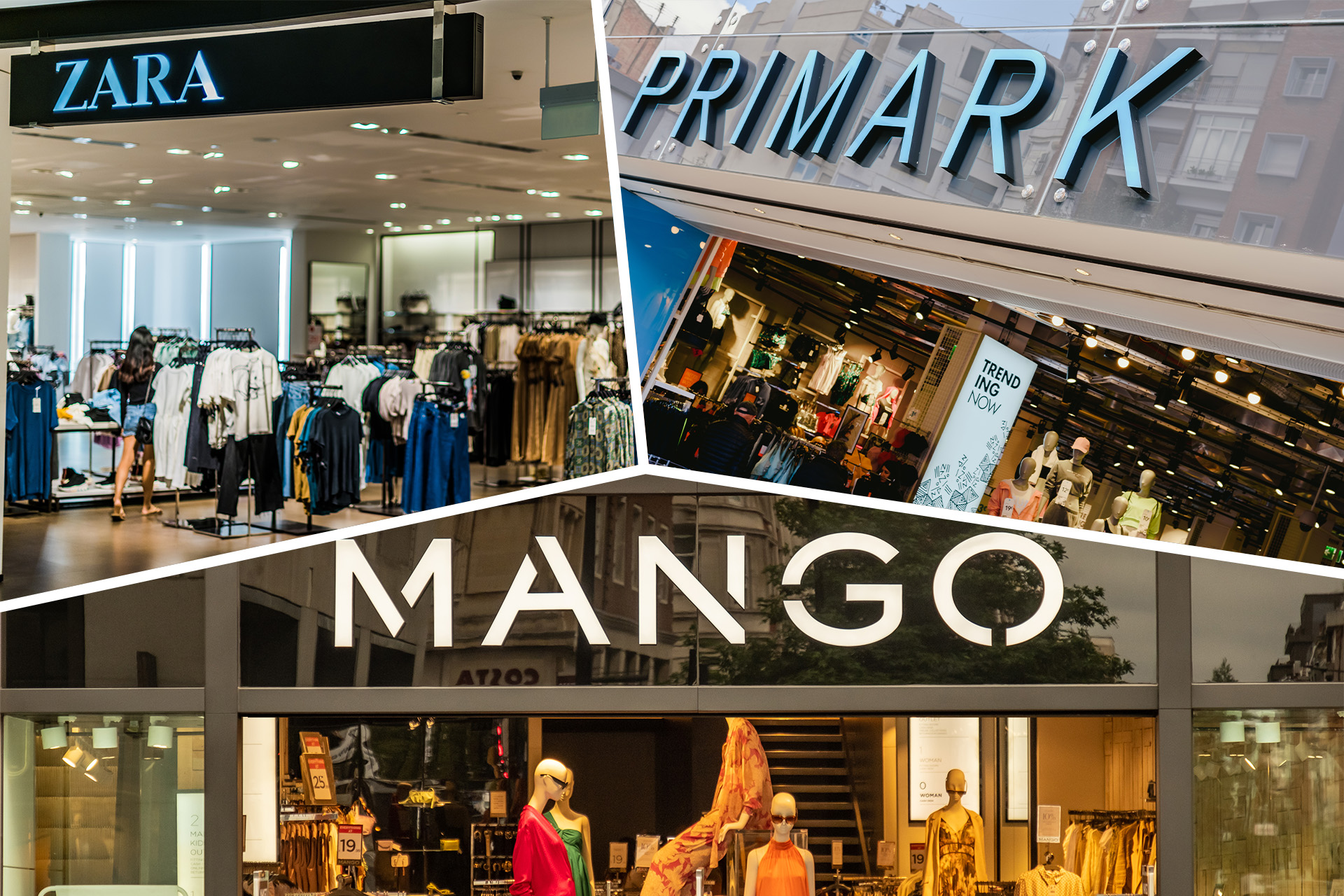
Although there have been concerns with retailers closing stores and drastically reducing their expansion goals, one bright light appears to be the European brands that are swooping into the states and taking advantage of available retail space. Many U.S. markets are still untapped for these European retailers, especially in the South, and these unique foreign brands appeal to Americans who are thirsty for new apparel concepts. Many of these trendy European brands are seeking larger spaces, in the 20,000- to 55,000-s.f. range, and some are open to occupying units in enclosed regional malls. The European stores garnering the most buzz for U.S. expansion include Mango, Primark and Zara.
Mango, the Barcelona-based apparel brand in more than 100 countries, is now embarking on a major U.S. expansion push after opening 12 stores throughout New York and Florida last year. Over the next two years, Mango is anticipated to open up to 15 new stores per year, with a focus on the Sunbelt states. Earlier this year, Mango announced a partnership with Brookfield Properties and will be opening stores in seven of its malls in 2023, and potentially at least three more of its malls in 2024. Upcoming growth for the brand will take place Texas, where at least seven stores will open throughout San Antonio, Dallas, Frisco, Friendswood and McAllen. Southern California is also targeted to receive at least six stores, in Glendale, San Diego, Rancho Cucamonga, Cerritos, Brea and Los Angeles. Georgia is also being eyed, with a unit expected to open soon at the Perimeter Mall in Dunwoody, a suburb of Atlanta.
Ideal retail space for Mango is the mid-range to Class A super regional enclosed mall or a pedestrian-friendly retail street-front promenade mall, in either urban or heavily populated suburban markets. Square footage requirements tend to have a wide range, between 4,500 and 26,000 s.f., depending on whether the store will sell apparel solely for women, or also sell items for men and children. The Mango team hinted that the majority of its U.S. stores will primarily only sell women’s apparel. Preferred co-tenants should include other mid- to higher range trendy women’s apparel brands, including Madewell and Urban Outfitters. Mango features unique, high-quality fashion-forward apparel that costs much less than luxury clothing brands.
Primark, the Ireland-based affordable fashion/housewares brand owned by Associated British Foods that first penetrated the U.S. with a Boston store in 2015, is now fully invested in continued expansion in the States with a goal of opening between eight and 15 new stores per year over the next three to four years. With a strong presence in the Northeast, Primark opened its first Southern unit last year in Sunrise, Fla., and will continue to heavily target Southern markets in the future. Look for continued growth into Florida, starting with a 50,000-s.f. unit in The Florida Mall in Orlando, in addition to new stores that will open in North Carolina, beginning with the state’s first unit this fall in the Concord Mills mall in Concord, N.C., a suburb of Charlotte. Its first Virginia store, in the Tysons Corner Center mall in McLean, will also open by late 2023/early 2024. Primark is also seeking sites in Texas and Alabama. This southern push will be aided by a new distribution center being built in Jacksonville, Fla., which should be completed by late 2023/early 2024.
Although Primark’s European stores can reach a square footage of up to 150,000 s.f., its U.S. stores will be smaller, between 30,000 and 55,000 s.f. Primark has had success taking over multi-floor second generation spaces of brands such as JCPenney, Forever 21 or a portion of Sears. The retailer seeks space in family friendly regional malls with heavy foot traffic in prime metro or suburban areas, including communities with a large minority/ethnic population. Popular co-tenants include other affordably priced mall-oriented retailers such as H&M or Old Navy.
Primark, which does not sell any of its items online and relies solely on in-store sales, is known for its value-priced apparel, shoes, home goods, beauty products and accessories.
Zara, owned by the Spanish-based Inditex, expects to open at least 10 new stores per year over the next three years. The Zara team has been gearing up for growth, especially with its purchase in late 2022 of fulfillment centers in Texas, Tennessee, South Carolina, Virginia, Pennsylvania and Wisconsin. Zara announced its goal to further expand into the metros of Las Vegas, Los Angeles, Dallas, Austin, San Antonio, Baton Rouge, La., Philadelphia, Miami, Charlotte, N.C., Chicago and New York. Many of these units, especially in the more populous metros, will be store relocations to larger units, as Zara intends to increase its average store size from between 17,000 and 25,000 s.f. to between 26,000 and 35,000 s.f. This is so Zara can have an easier pedestrian flow between the different store sections. Zara will also be expanding its more formal suits and dress section, with items that will cost more than the affordably priced fast fashion the retailer is known for.
The ideal site for Zara is a multi-level space in a thriving mid-range to Class A regional mall, open-air center or street-front space in a retail shopping district. Both highly populated suburban sites and downtown districts will be targeted. Co-tenants should run the gamut between affordably priced trendy fast fashion brands, such as H&M, to mid- to higher-end apparel tenants, such as Aritzia and 7 for All Mankind. Zara is known for its trend-setting fast fashion that appeals to millennials and Gen Z-aged men and women, which is priced more reasonably than other fashion label retailers for this demographic.