The candy shop retail industry is currently undergoing a renaissance. Many candy retailers are now beginning to introduce larger, more experiential-type stores in order to boost the fun factor and bring in traffic. Candy retailers tend to perform especially well in tourist-type locations, as consumers are already in a relaxed mood and are more likely to spend money. Candy shops are also an excellent fit in errand-type retail centers with strong foot traffic because sweets are an ideal feel-good quick impulse buy. With the merchandise at an affordable price point, candy shops appeal to all age brackets, from young children to senior citizens.
The candy shop tenant is a surefire way to increase traffic to a retail site. Co-tenants that work well include family and date night restaurants, especially because a sweets-oriented shop is a popular post-meal dessert destination.
Entertainment-oriented brands that attract large groups are also preferred co-tenants, such as movie theaters, bars and escape rooms. Hot markets for future expansion continue to be Southern states that have experienced a surge of new population growth over the last few years, and which have strong economic forecasts. Candy shop brands that are expected to increase their footprint on a national scale include IT’SUGAR, Rocket Fizz Soda Pop & Candy Shop, Kilwins and Laderach.
IT’SUGAR plans to open between 15 and 20 new shops per year over the next three to five years. In 2023, look for growth to take place in markets where it already has a presence, including Miami, Washington, D.C., Los Angeles and Las Vegas. The brand will also continue to eye new regions in key markets for continued growth. IT’SUGAR had recent store openings in Chicago, New York City, Boston, San Francisco, Austin and South Florida. The candy brand has three different store prototypes (3,000 s.f., 5,000 s.f. and 15,000+ s.f.) that it considers when looking for space. IT’SUGAR prefers sites that have a lot of bars, restaurants and other entertainment-oriented co-tenants, whether it be movie theaters, such as AMC Theatres, or even bowling alleys. Space can be in tourist-centered urban streets, lifestyle centers or regional malls with high-foot traffic and great visibility.
IT’SUGAR has also been dabbling in opening department store style stores in the 20,000+ s.f. range, and currently has five such stores in the U.S. The brand expects to continue opening approximately three of these stores per year. Its latest department store style shop, which is also its largest store, opened in late March in a three-story, 30,000-s.f. space in San Francisco’s tourist-heavy Fisherman’s Wharf that formerly housed a Lefty’s Ballpark Baseball Buffet & Café and had been a Rainforest Café before that. IT’SUGAR features a bright and colorful interior with sections devoted to specific brands, such as M&Ms, as well as retro candies, and the retailer also sells gift items including candles and apparel.
The Rocket Fizz Soda Pop & Candy Shop franchise expects to open between 10 and 20 new locations per year over the next three to five years. Hot markets that Rocket Fizz’ franchisees are targeting for growth include the Southern states of Florida, Georgia and the Carolinas, especially because many Northern U.S. customers who were accustomed to having a Rocket Fizz near them have been relocating to these Southern territories. California is also a hot market for continued growth for the brand.
Rocket Fizz seeks space in the 1,500- to 2,500-s.f. range in all types of retail settings, although the brand especially prefers downtown storefront locations with strong foot traffic. In addition, lifestyle centers, traditional mall sites and even outlet malls have all proven to be successful for the chain, as well as ski area tourist spots, such as Park City, Utah, and Vail, Colo.
Co-tenants can include local tourist gift shops, dining brands, including BJ’s Restaurant or Subway, as well as errand stops, such as T-Mobile. Rocket Fizz Soda Pop & Candy Shop carries a huge selection of nostalgic candy brands and licensed sodas, such as its newly introduced “Breaking Bad” soda, as well as 30 different root beers and specialty gift items, including anime products.
Kilwins is expected to be fast tracked into major expansion over the next few years thanks to Levine Leichtman Capital Partners (LLCP), a Los Angeles-based private equity firm, becoming a majority owner of the brand earlier this year. LLCP has already indicated that it will ramp up Kilwins’ expansion numbers, via franchising, well beyond its previous growth projections of 10 to 15 new stores per year. The new estimates could realistically be up to 50 new units per year within three years. LLCP is also responsible for the rapid growth of other franchised brands into new territories, such as Tropical Smoothie Café, Mountain Mike’s Pizza, Wetzel’s Pretzels and Nothing Bundt Cakes. LLCP has mentioned initial franchise expansion will take place in the Midwest, the South and the Southeast. Anticipate growth into more Western markets within three to five years beyond Colorado, where Kilwins already has a small presence, as LLCP’s other brands under its franchise umbrella all have a strong national presence throughout all regions of the country.
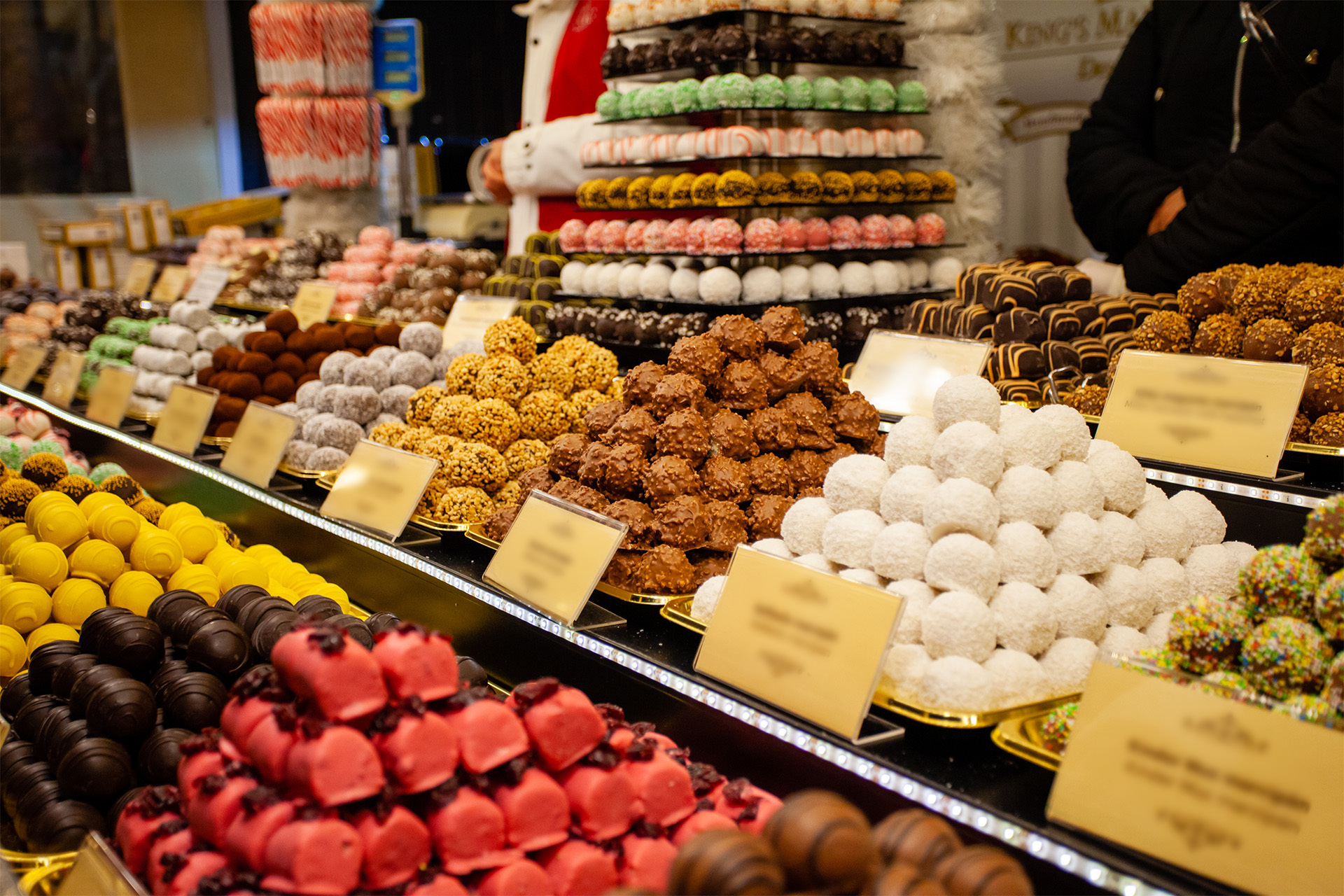
The footprint for Kilwins units is between 1,000 and 2,500 s.f., and the brand prefers space in retail street-front sites with heavy pedestrian traffic, although traditional shopping centers and indoor mall spaces will be considered if the space is in a popular vacation destination. Tourist areas and quaint historic downtown districts with a strong entertainment element are especially sought after, and later this year a franchisee based in St. John’s County, Fla., will be opening the brand’s first-ever drive thru. Preferred co-tenants include well-known restaurants and fast-food establishments, including Yard House or Burger King. Kilwins is famed for its freshly made fudge, hand crafted chocolates, ice cream and caramel apples.
Laderach, the Swiss-based chocolate retail brand that first penetrated the U.S. market in 2019 with four shops in the Northeast, garnered headlines in 2021 when it took over 34 Godiva store leases throughout the country to open its own namesake stores. New store growth is anticipated to be at a rate of between five and 15 new units per year over the next two to three years. Upcoming expansion will be focused on upscale markets in Smile states, especially within Texas, Florida and Southern California, which will be amplified by the brand’s new distribution center expected to open in Alliance, Texas, by late spring. Rumored new growth may take place along the Southeast coastal corridor states, especially in Georgia and North Carolina.
Preferred store sites for Laderach are between 1,000 and 3,000 s.f., inline or end cap, in higher end regional malls, shopping centers and lifestyle centers. Post-COVID, Laderach has been more focused on targeting affluent suburban metros versus urban sites, as their customers prefer to do their errands closer to their home locations.
Co-tenants can include brands that appeal to the affluent suburban mom, such as Sephora, Athleta and Pottery Barn. Laderach is renowned for its premium Swiss-made chocolates that feature artisanal decorative elements.