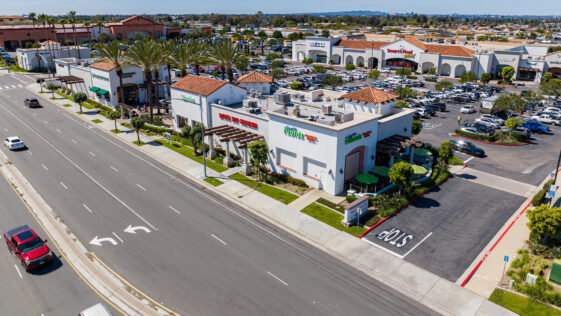
Chicken wing brands that have remained successful during the pandemic were the ones that either already had a quick-service take-out/delivery system in place, or quickly adapted to that format. New venues opening up in this category have moved away from their dine-in restaurant/sports bar roots and are instead catering to the national appetite for quick pickup service with smaller-sized inline and end cap units. Look for Wingstop, Hoots Wings, East Coast Wings & Grill, Wing it On!, Wing Zone, Atomic Wings, Epic Wings and Buffalo Wings & Rings to be eyeing new smaller spaces in the future. With a demographic that covers a wide age range, chicken wings tenants are suitable in all types of markets. Look for these brands to especially target college towns and residential areas in or near mixed-use apartment developments. Locations do not necessarily need to be near office/business parks, as peak traffic times for this dining segment skew towards dinner and late night. The smaller sized chicken wings dining establishments that provide easy take-out/delivery options have stayed afloat during the pandemic, and now the larger players like Buffalo Wild Wings are following suit.
Though Wingstop is focusing on growing its brand internationally, the chain is still bullish on opening new franchise units at a rate of about 100 to 130 per year for at least the next five years. Look for Wingstop to add additional units in suburban markets where it already has a presence. The chain will consider all types of spaces, including advantageously priced lease deals in high-visibility locations, as well as more off-premises Class B and C spaces for ghost kitchen set ups. Markets that the franchise has not completely penetrated yet include Northern California, Nashville, Tenn., Tampa, Fla., New York City and all regions throughout Minnesota and Maine. Wingstop has benefited from its small square footage requirements that can allow it to fill space in and around 1,725 s.f., the brand’s average size. The restaurant, which fared well during the pandemic because the brand easily transitioned to take-out and delivery-only thanks to its uncomplicated, wings-focused menu, generally seeks strip centers and power centers, as well as mixed-use spaces in areas with a high concentration of 30-somethings and young families. Preferred co-tenants include large grocery chains, such as Kroger and Walmart Super Centers. Wingstop, which has aviation themed décor in its restaurants, is known for treating its flavorful wings as its main entree and plans to continue opening more take-out only establishments in the future.
Hoots Wings, the fast-casual wings-centered rebrand from the Hooters restaurant chain, recently franchised its concept, and will be opening approximately 17 new units this year, doubling that amount for 2022 and hopefully opening 50 new units in 2023. Markets in the Midwest, Southeast and Northeast will be targeted. Look for Austin, Charlotte, N.C., Boston, Kansas City and St. Louis, Mo., to be ideal sites for growth. The Hoots Wings franchise seeks inline and end cap space between 1,300 and 1,800 s.f., without a drive-thru, as the brand expects most of its sales to be mainly delivery/pickup. The franchise looks for locations in street-front, strip mall and neighborhood center spaces in highly trafficked visible areas in urban residential and suburban markets in close proximity to colleges, along with mixed-use office and apartment developments. Preferred co-tenants include fast-casual restaurant brands, such as Chipotle. Hoots Wings, developed because the Hooters’ wings were one of the most popular ordering items, is famous for its multiple varieties of wings, including boneless, breaded, smoked, roasted and fried.
East Coast Wings & Grill will open at least seven new restaurants in 2021, and though cautious with its growth, the brand is hopeful it has a solid enough infrastructure to open approximately 35 to 40 units per year from mid-2022 onward for the next three to four years. The restaurant chain has sold more franchise deals throughout the Southeast and expects to have growth in suburban markets and college campus towns throughout states such as Virginia, the eastern portion of Tennessee, South Carolina, North Carolina, Florida, Georgia and Pennsylvania. East Coast Wings & Grill continues to open smaller and smaller prototypes, with its average restaurant space in the 2,300- to 3,000-s.f. range. The chain seeks inline or end cap spaces in power centers, strip malls and street-front retail, with high-traffic co-tenants such as Starbucks and banks. The restaurant is a family-friendly fast-casual establishment that also serves craft beer and boasts 60 award-winning wing flavors with seven different heat index options.
Wing It On! expects to open about 20 to 25 new units per year over the next four years throughout the Northeast, Southeast and South. Regions targeted for future growth will be Louisiana (New Orleans and Baton Rouge), North Carolina (Raleigh and Durham) and Texas (Austin, San Antonio and Dallas/Fort Worth). Immediate development deals are in place for new unit growth in Boston, Houston, Birmingham, Ala., Georgia, Florida, and all regions in South Carolina. The chain seeks space between 1,000 and 1,500 s.f. in suburban and rural strip malls, street-front retail and grocery-anchored neighborhood centers, preferably near college campuses. Targeted co-tenants include other delivery-themed brands, such as Pizza Hut, and high-traffic neighborhood retailers, such as Great Clips. Wing It On! features chicken wings with 18 different sauces, six different rubs, as well as chicken sandwiches and seasoned fries.
Wing Zone, which was just purchased by Capriotti’s Sandwich Shop in January, expects to aggressively open more units in the West outside of its core base in the South and Southeast, beginning with six units in and around Las Vegas. More expansion throughout all markets is expected to follow over the next few years. In the immediate future, Wing Zone plans to open about 15 to 20 new units this year, hopefully increasing that number to about 30 to 35 new units per year from 2022 onward. Florida, Georgia, South Carolina and Texas will continue to see new units springing up, especially in college towns, as well as urban-type settings near apartments, townhomes and businesses. The brand is also keen to boost its ghost kitchen locations for its online delivery-only brand, Tender Zone, especially as a way to test out new markets for retail growth. Wing Zone seeks inline space between 1,200 and 1,500 s.f. in locations within one mile from a college campus, and not necessarily on main-and-main. This is not only to save money on rent, but also because Wing Zone has always been more of a take-out/delivery model. For this reason, Wing Zone easily weathered the COVID-19 storm, as its system of opening units with limited seating/adequate parking for delivery and pickup was already in place. The brand shies away from drive-thru units and can accommodate units even as small as 1,000 s.f. Retail strip and neighborhood centers are preferred, with ideal co-tenants being office supply stores, such as Staples, off-campus college bookstores and other similar restaurant brands with limited indoor seating, such as Subway. Wing Zone is known for its fast-casual wings deliveries with up to 17 different flavors, including its extremely spicy “Mango Fire” blend.
Atomic Wings, which has 11 locations in the Northwest, expects to open approximately 20 units per year over the next five years in the new markets of Nevada and Arizona. The brand is also eyeing growth into Pennsylvania, New Jersey, Florida and Connecticut, in addition to expanding further out into other New York territories. Atomic Wings seeks space between 800 and 1,500 s.f., with enough seating for at least 15 people. The brand looks for locations near restaurants and bars within densely populated mixed-use urban spaces, as well as in suburban strip malls near colleges, with high traffic co-tenants such as Orangetheory Fitness or CVS Pharmacy. The wing chain is known for its hormone-free chicken hand-tossed in unique sauce flavors, and has branched out its offerings to include both grilled and vegetarian chicken wings.
Epic Wings will open approximately 30 new units over the next three years, concentrating on areas where new multitenant agreements have been signed, including Tampa and St. Petersburg, Fla., as well the San Antonio region of Texas, both of which are new states for the brand. Continued expansion is also expected in California, especially throughout Bakersfield. Epic ideally seeks 2,000-s.f. end cap spaces with patio seating available, or units in the 2,200- to 2,800-s.f. range if the space will include a small bar, as many of its units do. Although all demographic areas are ideal for Epic, the brand does especially well in high-income suburban spots, as well as lower-to-moderate urban locations. Preferred co-tenants are other restaurant brands, as well as high-traffic big-box tenants such as The Home Depot or Target. Headquartered in San Diego, Epic Wings has been awarded the city’s “Best Wings” for five years in a row.
Buffalo Wings & Rings is hoping to open about 15 to 20 new units over the next three years, with increased acceleration expected from 2024 onward. The brand will continue to expand within the designated market areas where it already has a presence, including throughout the Midwest, and within all states in the South, from Texas to Florida. Buffalo Wings & Rings seeks space that averages 5,000 s.f. in mid-sized markets, and the brand prefers end caps with an area for curbside pickup. Ideal co-tenants for the chain include pharmacies, major grocery stores, big-box retailers, such as Walmart, and even breakfast-themed tenants, such as Snooze, an A.M. Eatery. The franchise is test driving a new prototype, called the G4 model, in which there is a designated separate door/parking space for pickup/delivery orders, an outdoor patio fire pit and a reconfigured interior bar in the center of the restaurant rather than along a side wall. The aim of this prototype is to create more of a “club-level” community feel that appeals to millennials, and the G4 model debuted in October in a 5,000-s.f. standalone unit in Milford, Ohio. A second G4 unit is expected to open by mid-2021 in Campbellsville, Ky. The Buffalo Wings & Rings franchise is a sports-themed restaurant that serves its made-to-order wings with homemade sauces, in addition to burgers, salads and other appetizers.
Buffalo Wild Wings is testing a much smaller inline and end cap prototype, in the 1,300- to 2,000-s.f. range, preferably with a drive thru, called Buffalo Wild Wings Go. The units will be tested in markets such as Tampa, Fla., and Phoenix. A 1,320-s.f. unit is expected to open before the end of this month in San Antonio, and a 1,342-s.f. unit opened in January in Glendale, Colo., in addition to the premiere of this Go model in Atlanta last May, with an 1,800-s.f. unit. These smaller configurations are primarily for take-out and delivery orders with a limited menu, and will be popping up in strip malls, a departure from Buffalo Wild Wings’ usual 4,000- to 7,000-s.f. sit-down sports bar restaurants that are frequently found in standalone outparcels at shopping malls. The new Go models prefer other fast-casual and quick-service restaurants as co-tenants, such as CAVA. The Go units feature both walk-up counters for order placement, as well as heated lockers for food pickup. The brand was adversely affected by the pandemic, and owner Inspire Brands is hopeful that these smaller models will allow enough flexibility for future franchisee interest. In the meantime, look for the brand to ease up on opening its larger sit-down restaurants, and to potentially expand its new prototype into both urban, suburban and college town areas in all markets by late 2021/early 2022. Buffalo Wild Wings is famous for its New York-style buffalo wings with 22 sauces and seasonings.